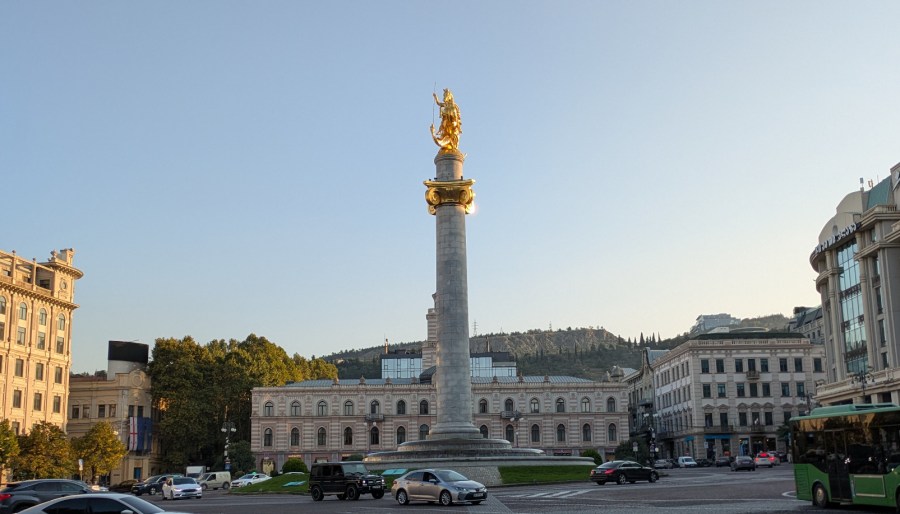
Supra, my favorite restaurant in Washington DC, regularly arranges trips to the Eastern European country of Georgia, whose cuisine inspired the restaurant. This past fall, I went on one of these trips. It was a whirlwind of a tour; we traveled throughout the country and sampled each regions food and wine.
Georgian Food
We had traditional Georgian meals throughout our trip. Many of the dishes either used the same base ingredients or were different takes on the same dish. I’ll summarize these commonalities here.

At every meal we had cheese bread called Khachapuri, which is the most famous Georgian dish. There are dozens of varieties of Khachapuri ; we had 15. Another common dish was walnut stuffed eggplant. The eggplant is sliced very thin, grilled, covered in a walnut based stuffing, and rolled up. Most meals had this. And when they didn’t, a different eggplant based dish was served. Just about every meal started with a tomato salad. The seasoning varied, and sometimes other vegetables were included, but we always had it. And every meal had mushrooms of some form. Sauteed or grilled, lightly seasoned or in a sauce, or covered with cheese, mushrooms were a part of the meal.
Tbilisi

Tbilisi is the capitol of Georgia and a large percentage of the country’s population lives there. We started and ended our tour there. Like many capitol cities, a wide variety of cuisine can be found there. However, the places we dines at all served traditional Georgian food.
Mtskheta
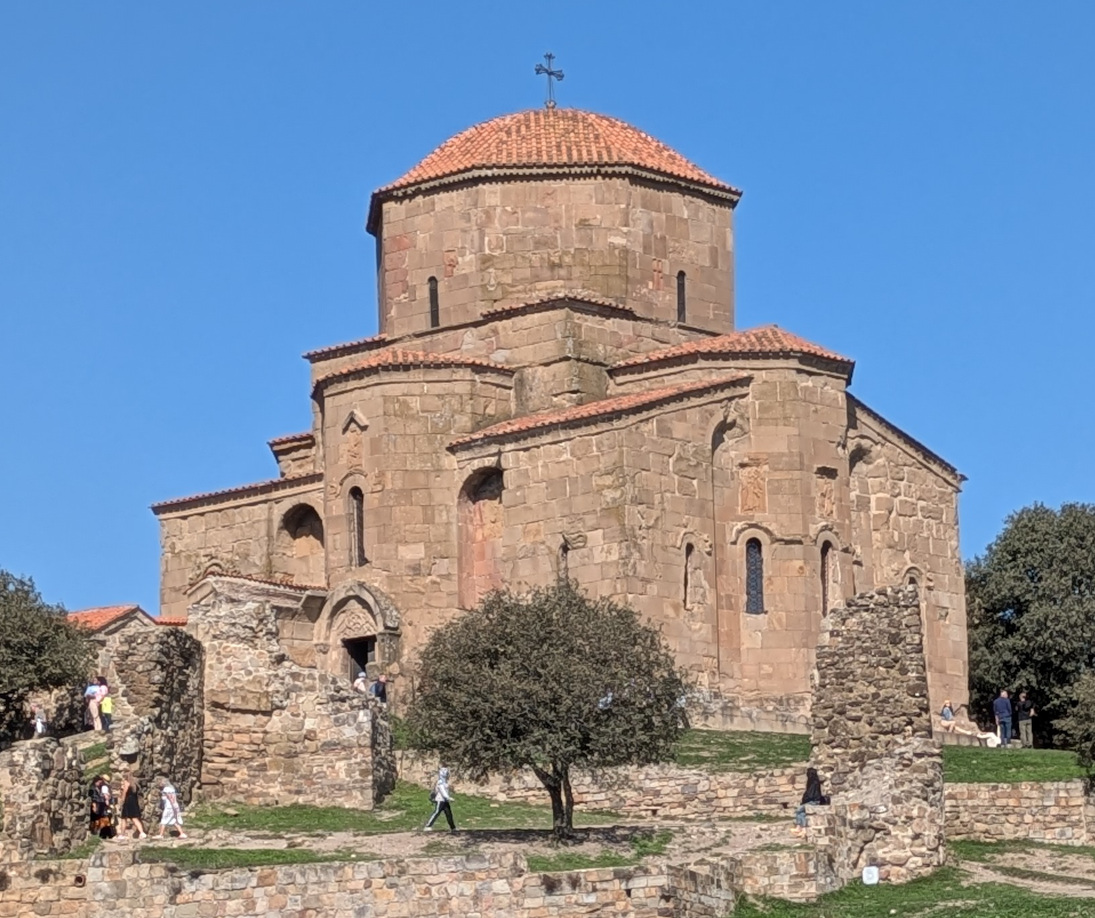
On the first day of the tour, we traveled from Tbilisi to the ancient capitol of Georgia, Mtskheta. The Mtskheta name also indicates the region also lends its name to the region it is in, Mtskheta-Mtianeti. The city is located about 15 miles north west of Tbilisi, at the confluence of the Kura and Aragvi rivers. The capitol was switched to Tbilisi in the 3rd century BC. While in Mtskheta, we visited the Jvari Monastery — a 6th century AD complex on the hills over looking the city — and, in the center of the city, the Svetitskhoveli Cathedral. The current building was built in the 11th century , but the first church on the spot was built in the 5th century. The location is significant in the conversion of Georgia to Christianity.

Ornament Express
After visiting the cathedral, we had dinner at Ornament Express, located next to the back wall of the church complex and offering a great view.

While Ornament Express’ menu contains international food, our meal consisted of traditional Georgian cuisine. The center point was a classic preparation of beans in a clay pot (salobie, in Georgian). Salobie is accompanied by pickled cucumbers, corn cakes, and an assortment of fresh cheeses. A simple, but fantastic combination. For dessert, we had a fruit platter (a common occurrence on the trip). The pears stood out, as they were very ripe.
Poliphonia

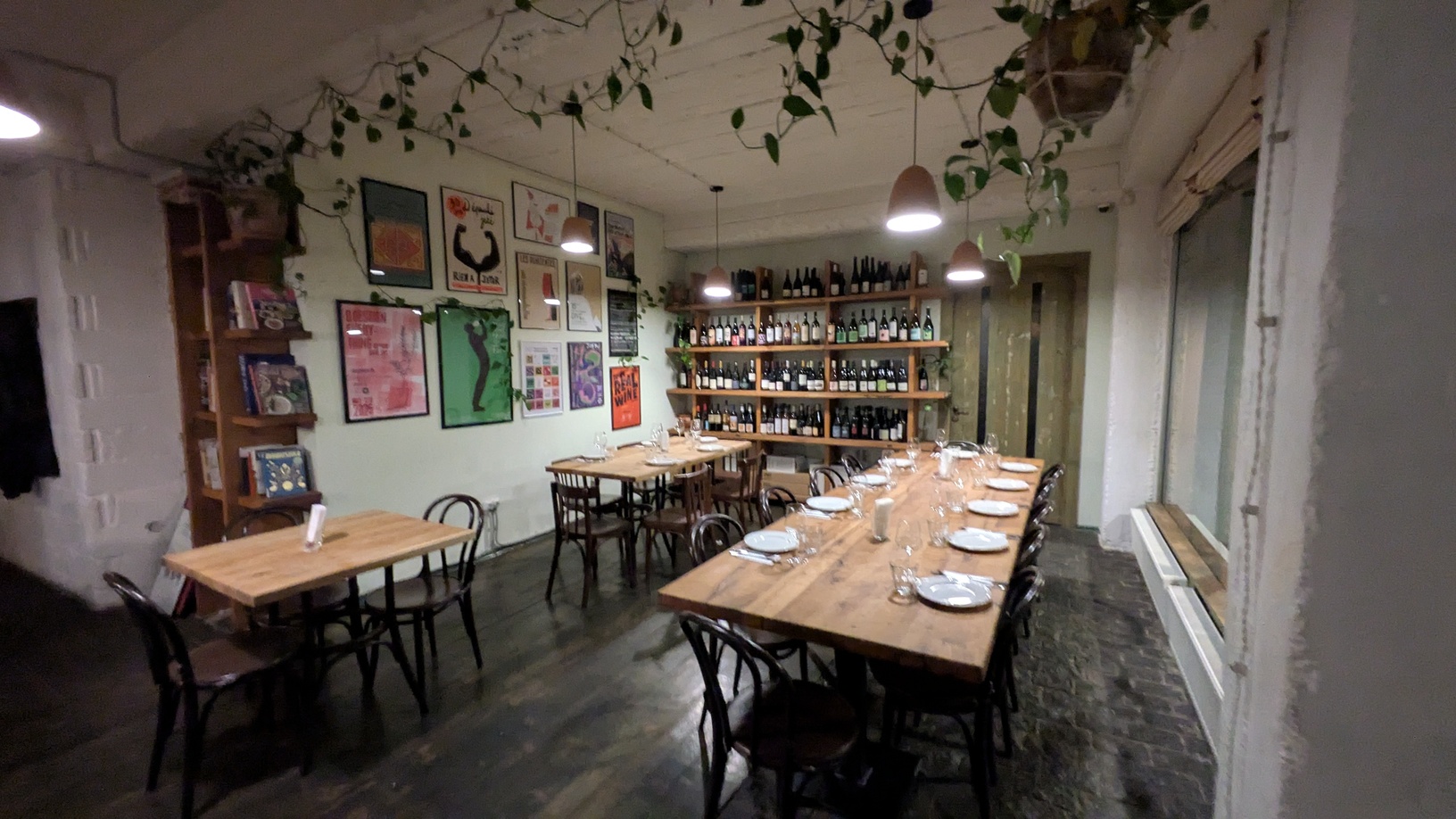
After finishing lunch, we returned to our hotel and rested a bit. Dinner was at the restaurant Poliphonia, located in the heart of Tbilisi. The name is a reference to Georgian music, one of the oldest forms of polyphony (music with two or more lines of melody). The restaurant evokes that in its cuisine, balancing the food with its boutique selection of natural wine.

Reflecting on the dishes we were served at Poliphonia, I feel they were among the most creative. The tomato salad was mixed with bread; the texture and flavor was quite unique. There was a zucchini salad, with thinly sliced zucchini topped with hazelnuts. Next was fermented and fried squash blossoms. The eggplant was served on a flatbread. A favorite dish was a broccoli salad with red cabbage – the flavor combination was dynamite. Another favorite dish was a gratin, similar to Shepherds pie, but made with fennel sausage. On top of a layer of potatoes was melted cheese. It was fabulous. Every dish had a little twist. Even the salt was different, it had been soaked in wine.
Old Town Tbilisi

On the second day, we toured old town Tbilisi, visiting sites such as the Mother of Georgia, “The Bridge of Peace”, and some sulfur bath houses.. Afterwords, we had lunch at a restaurant nearby: Pictograma.
Pictograma
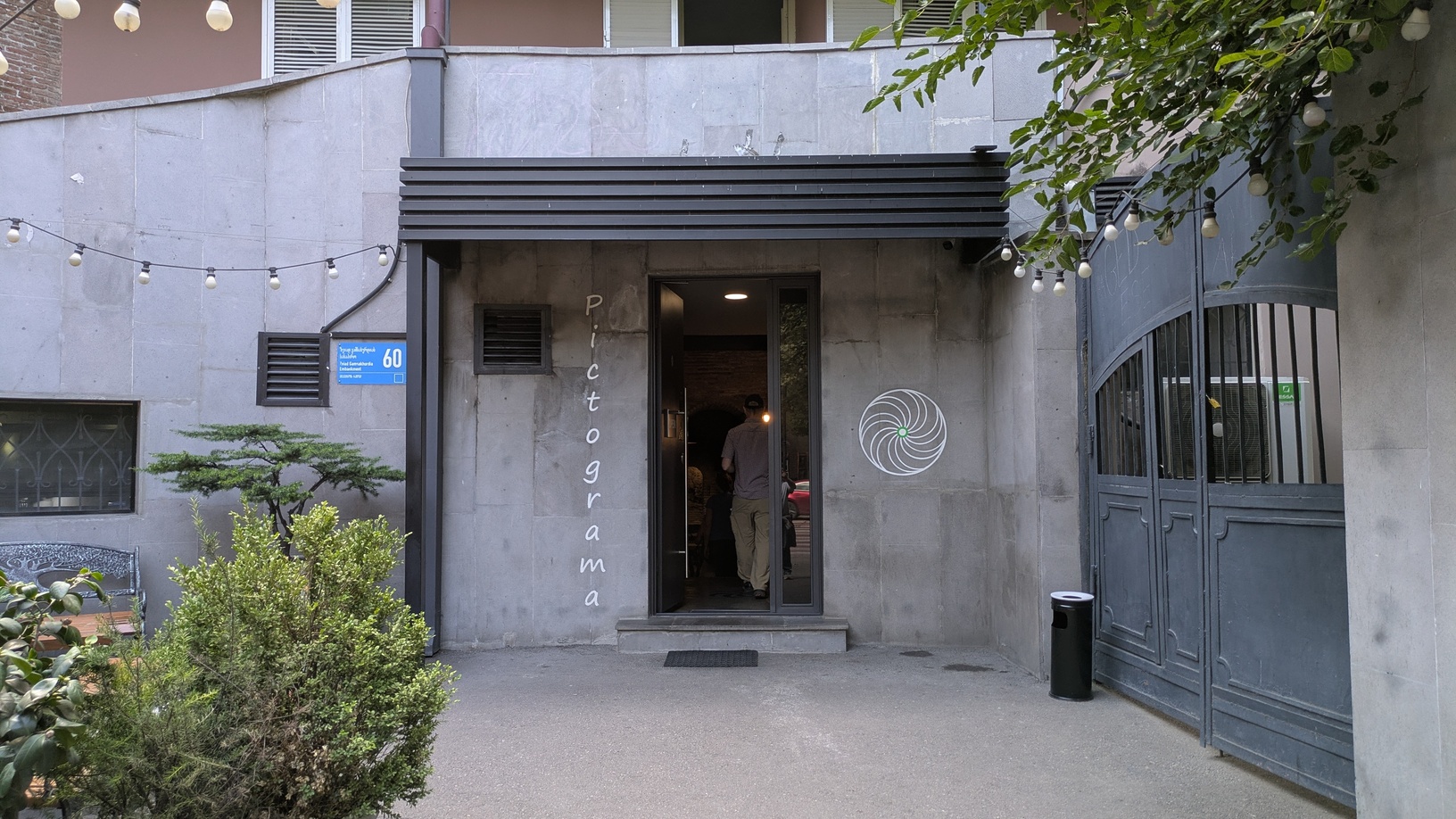
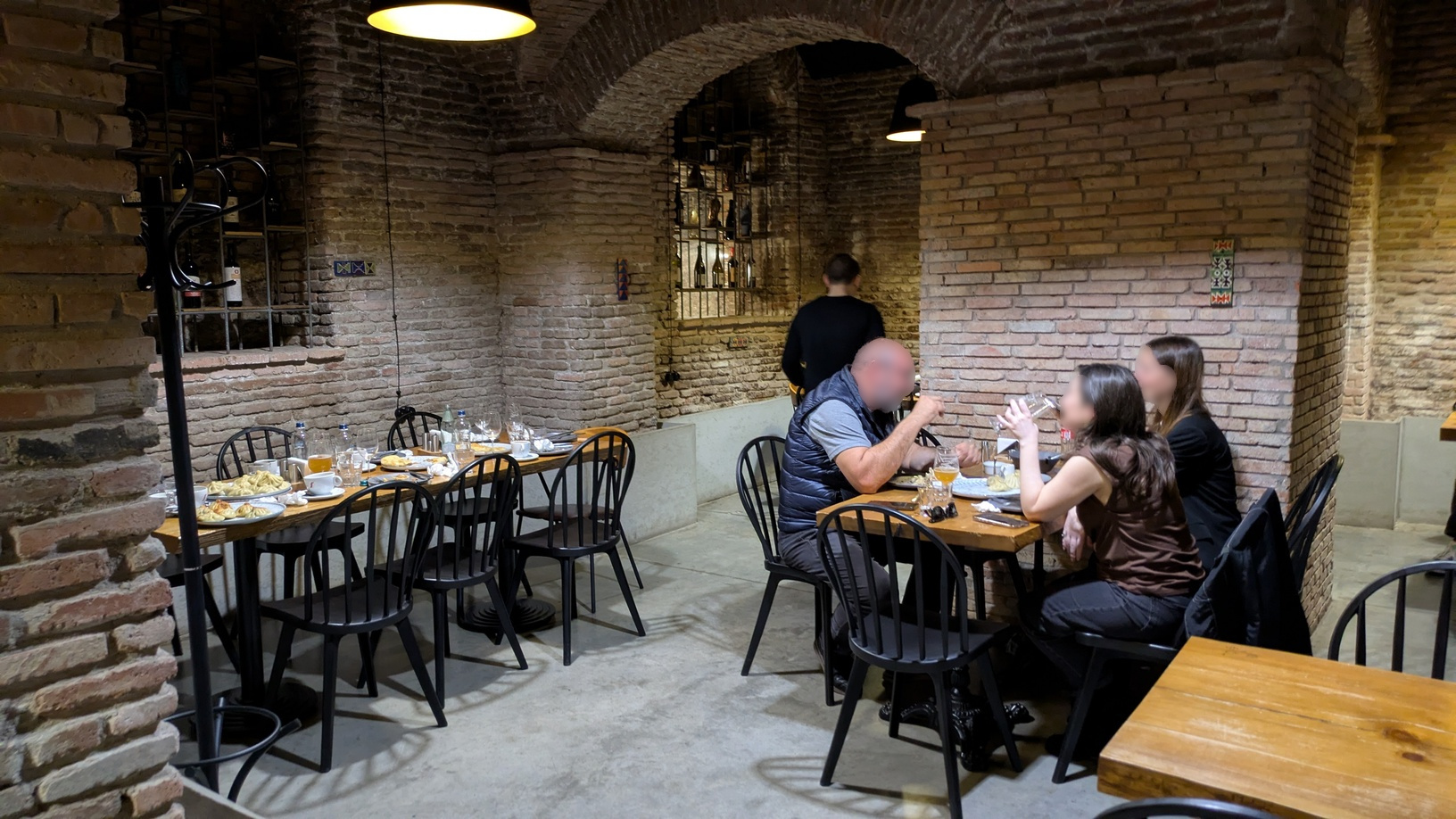
Pictograma specialty is Khinkali, a type of dumpling that is a hallmark of Georgian food. The dumplings are stuffed with either meat or potato. We got both.

The potato dumplings are served will a small pot melted butter, poured over the Khinkali. Heart cloggingly delicious. Other dishes included a tomato salad and rolled eggplant. The dessert was something special. Called Kada, it is a flat bread stuffed with brown sugar and butter. Amazing.
Cafe Littera

Dinner the second day was at a lovely restaurant called Cafe Littera, not far from our hotel in Tbilisi. Located behind the 120-year-old Writers’ House of Georgia building, it has a spacious outdoor dining area, with tables spread throughout a garden. It was luxurious!

Cafe Littera’s chef, Tukuna Gachechiladze is famous for fusing traditional Georgian cuisine with modern flavors. The most traditional Georgian dishes were a platter of dips (many of our meals started with such a platter), and a sauteed mushroom dish. The platter had five dips: beet, eggplant eggplant, a bean/pumpkin puree, yogurt, and cheese. The mushroom dish had three kinds of mushrooms and were topped with tarragon. Other fare included two tomato salads, one with peaches and one with grape tomatoes and cheese, crispy artichokes, ceviche, and polenta topped with shrimp.
Warehouse
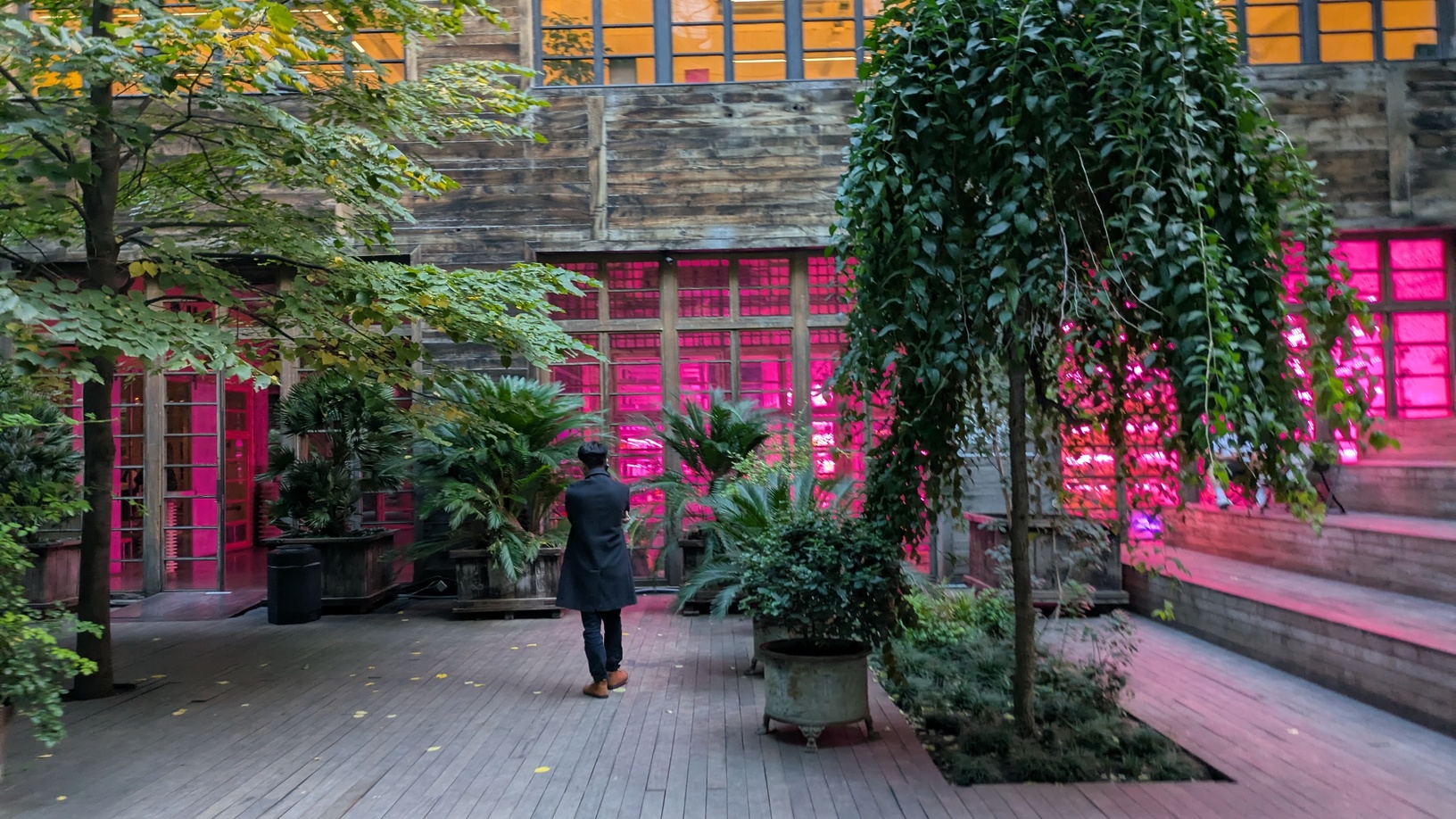
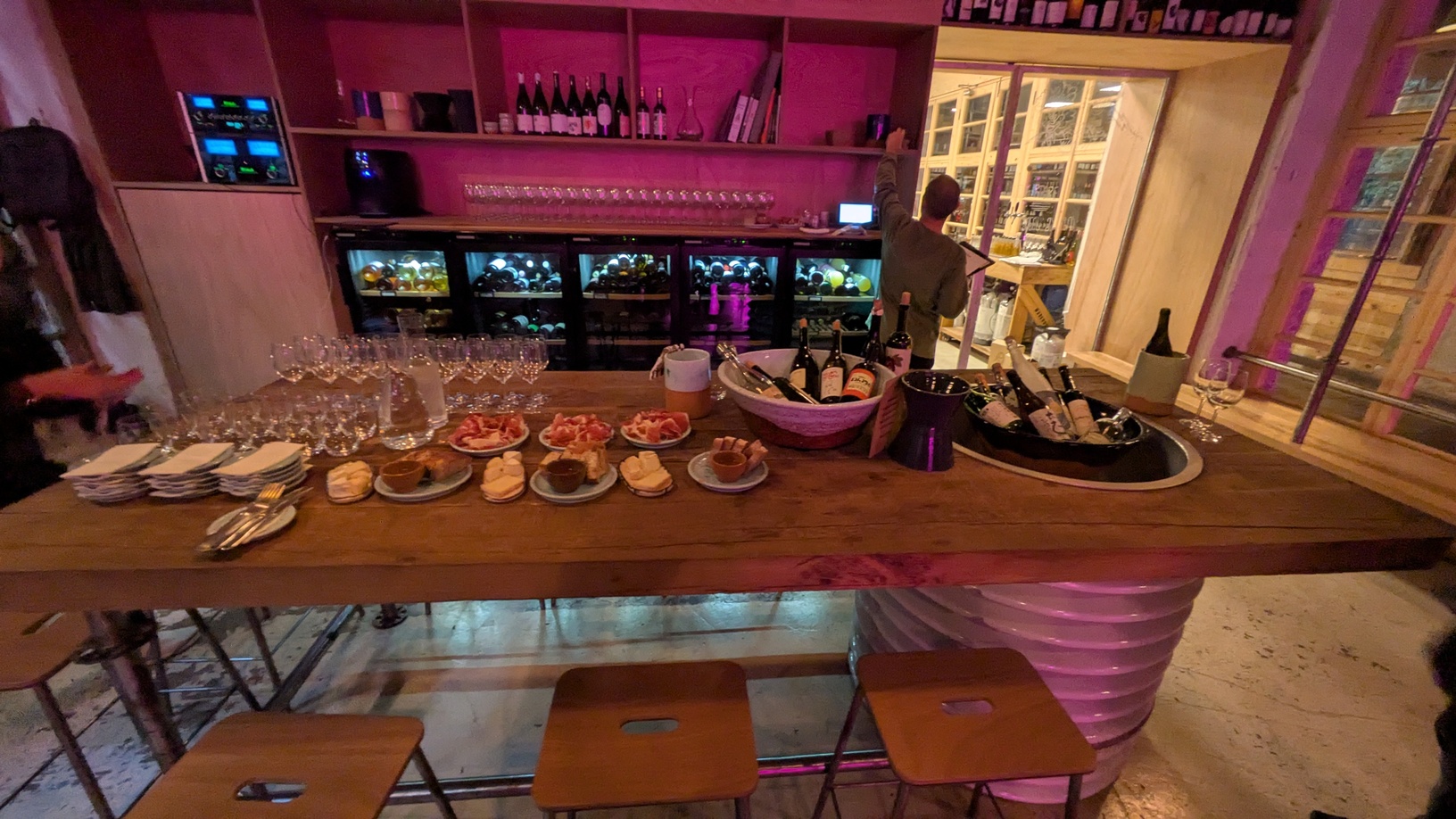
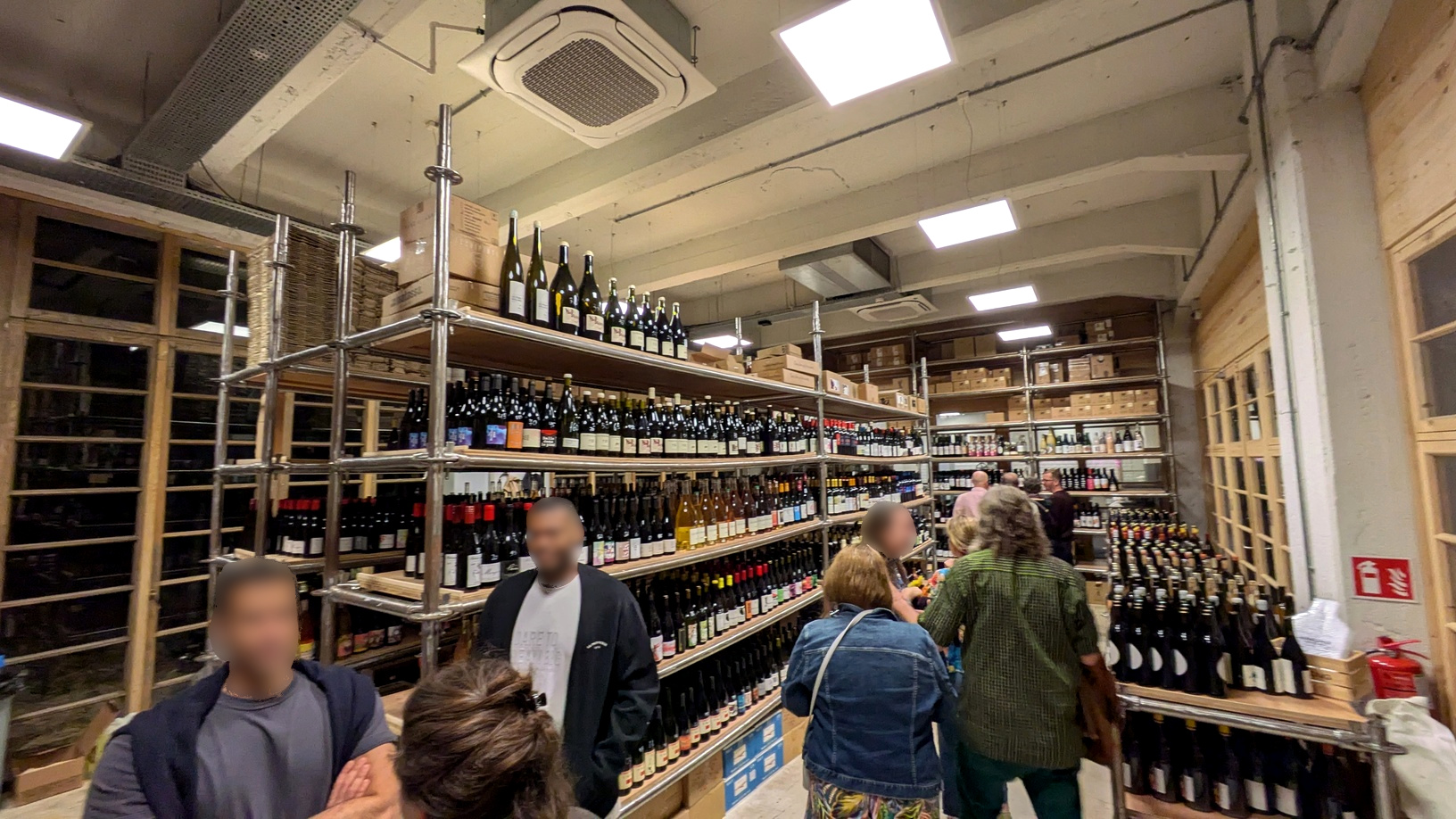

While in Tbilisi we had several tastings at a wine bar called the Warehouse. Their selection is extensive. If you are looking for wine, this is the place to go.

Chacha Corner
In Georgia, it is common at the end of a meal to have a shot of a local bandy called Chacha. It is made from grape parts — skins, stems, and seeds — left over from making wine. Chacha can be of varying quality. After dinner one evening, we walked to a place that has the best: Chacha Corner.
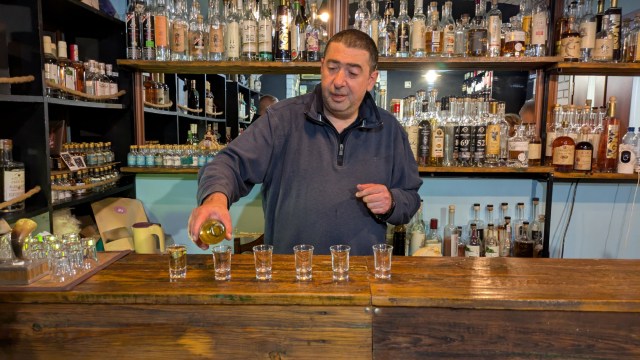
It is owned and operated by Vato Botsvadze, a gregarious fellow who made us feel quite welcome. I’m not sure how many varieties he has, but he offered us six. I tasted three: a pepper infused chacha, a chacha aged in oak, and a traditional chacha. All were excellent, but my favorite was the pepper one.
Western Georgia
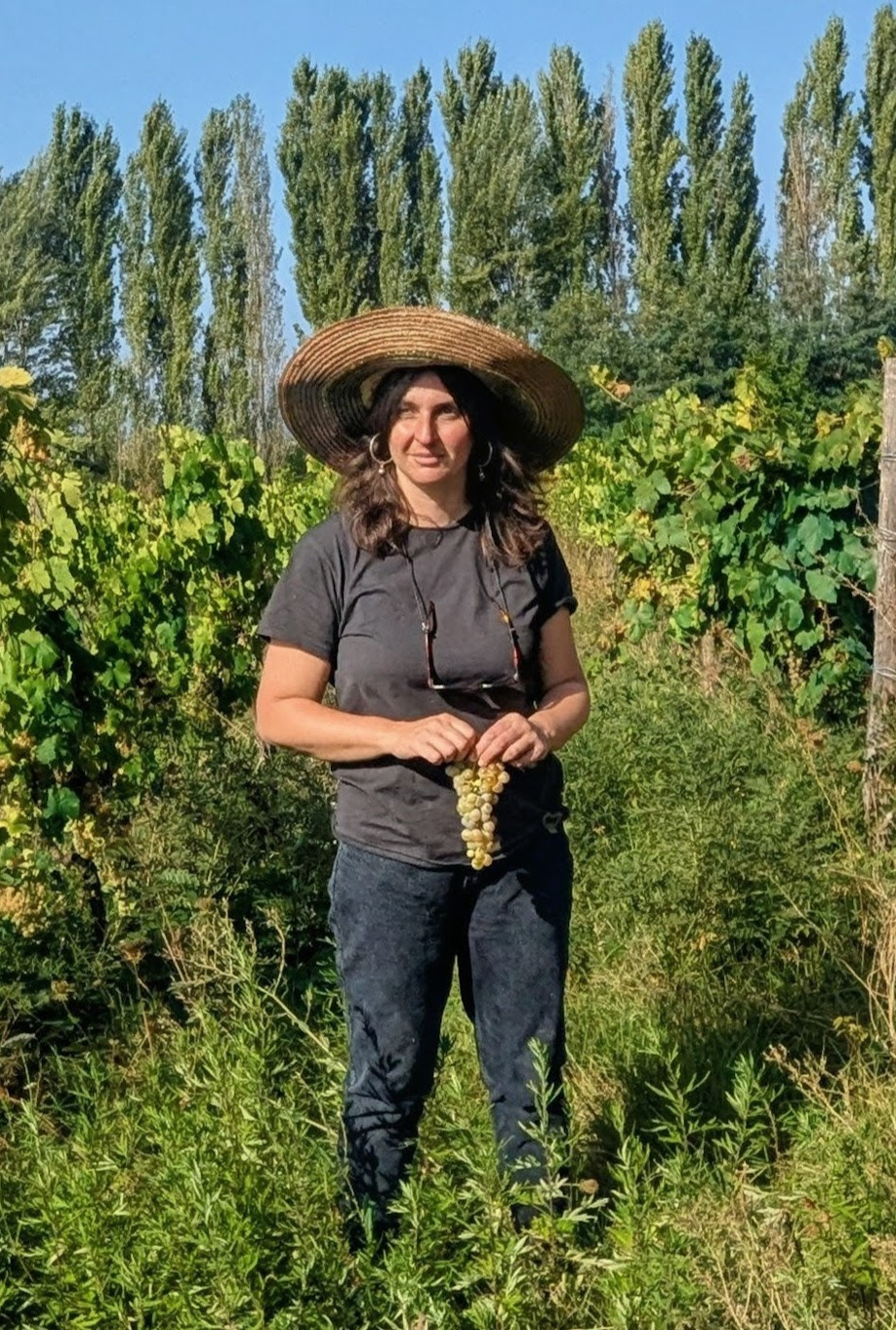
After our initial days in Tbilisi, we went on the road to western Georgia. We stopped in Mukharani, to help Tamuna Bidzinashvili of Kortavebis Marania harvest grapes. Then we continued on our journey.
Rdzlebi
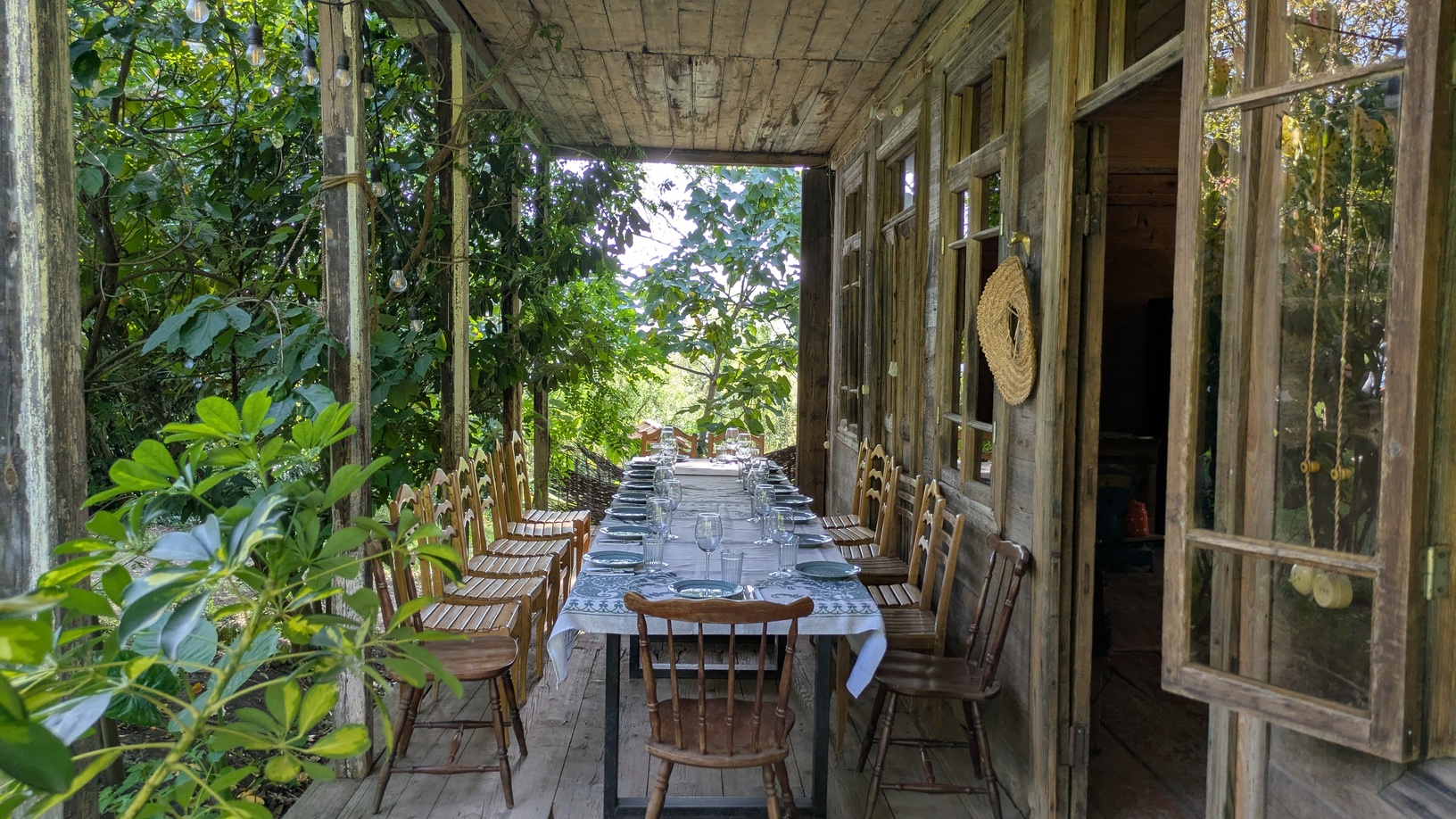


For lunch, we ate at a farm restaurant in Terjola, called Rdzlebi (sister-in-law, in English). It is operated by Keto Puturidze and her in laws (hence the name), with the wines supplied by her husband Gogita Makaridze. The couple lives on the property, and the restaurant is housed in the historic family home. Keto gave us a tour of the house; we dined outside.
We had a traditional Georgian meal with a tomato/cucumber salad, beans with corn cakes, a variety of dips (including pumpkin and eggplant), and Khachapuri. Everything was excellent, but two dishes stood out. One was the pork sausage. Freshly made from their own animals. it was without a doubt the best sausage on the trip. The other was ricotta dumplings. They were covered with a blackberry red wine sauce, giving it a sharp, distinctive taste.
Kutaisi

After leaving Terjola, we traveled to the city of Kutaisi. Kutaisi is the largest city in western Georgia and is the capital of the Imereti region. We did some site seeing, relaxed for a bit, and then went to dinner in downtown Kutaisi. Continuing with the sister theme, the restaurant is named Sisters and is owned and operated by a group of sisters.
Sisters

Of all our meals in Georgia, the one at Sisters was the least private. The dining area was one big room, packed with people, and quite loud. So loud that it was hard to have conversations. Eventually, the noise quieted down. Sisters had a live band playing, but it was hard to hear them over. The restaurant features Imereti cuisine. Of the 7 courses, only two were similar to ones we had before: a bean dish, and mushrooms in walnut sauce. The rest were new. Highlights were a pumpkin/walnut dish topped with pomegranate seeds, and a vegetable stew consisting of eggplant, peppers and onion. The dessert was also a local specialty: sweetened wheat bulgar mixed with walnuts and candied cherries. I liked it, although several of my companions did not.
Nikoladzeebis Marani

The next day, we visited the winery of Ramaz Nikoladze, the Mick Jagger of Georgian wine. Ramaz is one of the founders of the natural food movement in Georgia. He hails from the region. His business, which started in 2007, is on land owned by his grandparents. We toured his wine cellar and had a tasting. Ramaz was very gracious and friendly, even sharing with us a bottle of his “special wine.” One of his neighbors also stopped by, sharing his wine.
Baia’s Winery

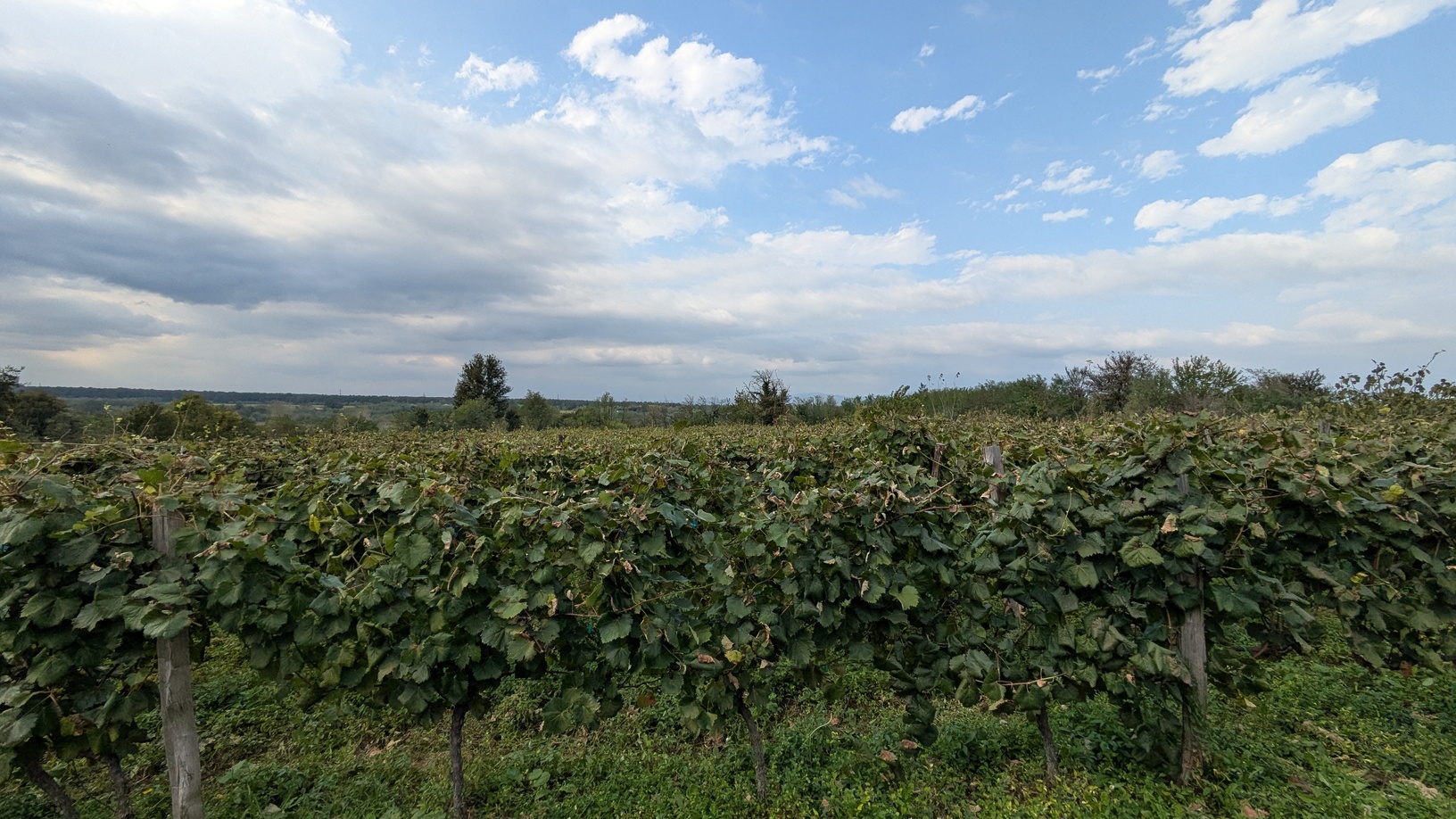
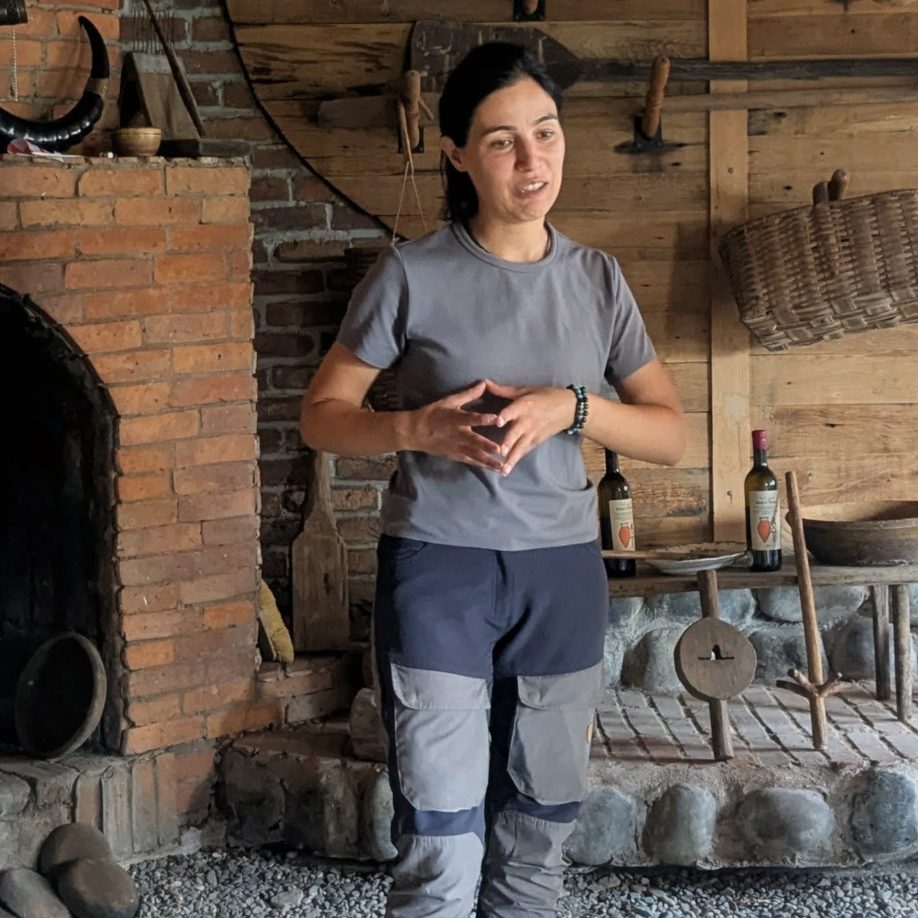
After the wine tasting with Ramaz, we had lunch at Baia’s Winery. Baia Abuladze is a third generation wine maker. She grew up in Imereti, but move to Tbilisi for college, obtaining an agricultural degree. Not happy with city life, she returned to the region after graduating and continued the family tradition with her siblings Gvantsa and Giorgi. She is a major player in the natural wine movement. So much so that she is featured in a book about women wine makers in Georgia: A Gently Fermenting Revolution.

We had lunch in a house on the winery grounds. The meal included several familiar items: a tomato/cucumber salad, chicken, a pot of beans, and Khachapuri. Other items included a stuffed eggplant — small and stuffed whole, not a roll, stuffed baby bell peppers, carrots in a walnut sauce, cheese curds, and a beet salad.
Lilestan


That evening, we had dinner in Kutaisi at the restaurant Lilestan. We were warmly greeted by the owner, Lile, when we arrived.
Lilestan’s menu consists of a mix of traditional Imereti dishes and international cuisine. Our meal was mostly traditional dishes. These were variations of dishes we had become familiar with: stuffed eggplant, mushrooms in walnut sauce, and Khachapuri.
The eggplant was served with a coriander mint sauce, which was a bit different. The Kachapuri was a regional variation called Phkaliani khachapuri. In addition to local cheese, it had some sort of green herb and dried barberries on top. There were some new dishes as well. Most notably Kalia (veal, onions, and peppers in a red wine sauce), and Elarji Balls (little cheese balls). The dessert was a traditional Imertian dish made with sour cream with berries and walnuts mixed in. A last minute addition to the dinner was Adjaruli khachapuri. It is cheese served in a large bread boat and topped with an egg, mixed in upon serving. Adjaruli is the most common form of khachapuri in the U.S., and wanted to have some. It was not on the menu anywhere on the schedule, and Lilestan made a single serving version for us as a favor. This was much appreciated.
Martvili’s Marani

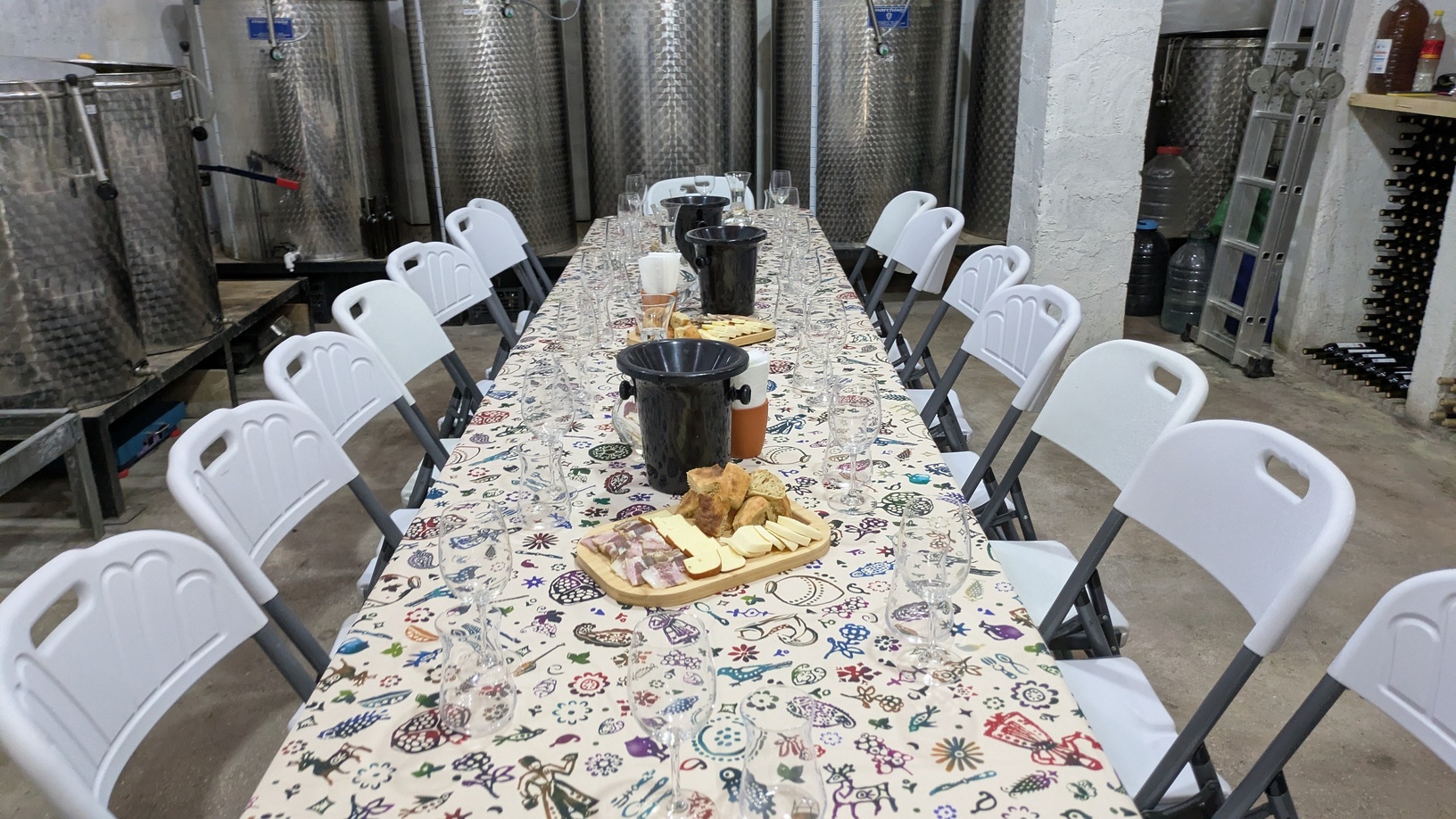

On our third day in Kutaisi, we traveled to the neighboring region of Samegrelo where we visited a husband and wife wine making couple. First up was the husband’s winery, Martvili’s Marani, operated by Zaza Gagua. We toured the wine cellar, followed by a tasting of Samegrellian wines.
and the time and Keto started making wine. This was a rarity in the region.
Oda Family Winery
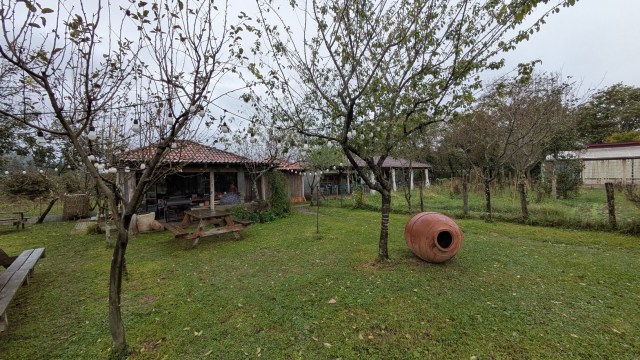

After the wine tasting, we had lunch at the Oda Family Winery, run by wife, Keto Ninidze. In addition to being a wine maker, Keto is also a prominent journalist and has been featured in Vogue magazine. She wrote the book A Gently Fermenting Revolution, mentioned above. Like Baia, Keto is a major force in the natural wine industry. The name Oda refers to the traditional style of wooden house found in Western Georgia. The Oda at the winery is one of the oldest, built in 1933 by Zaza’s great-grandparents. The couple moved to the property in 2016, when wine making in the region was rare. Keto changed that.
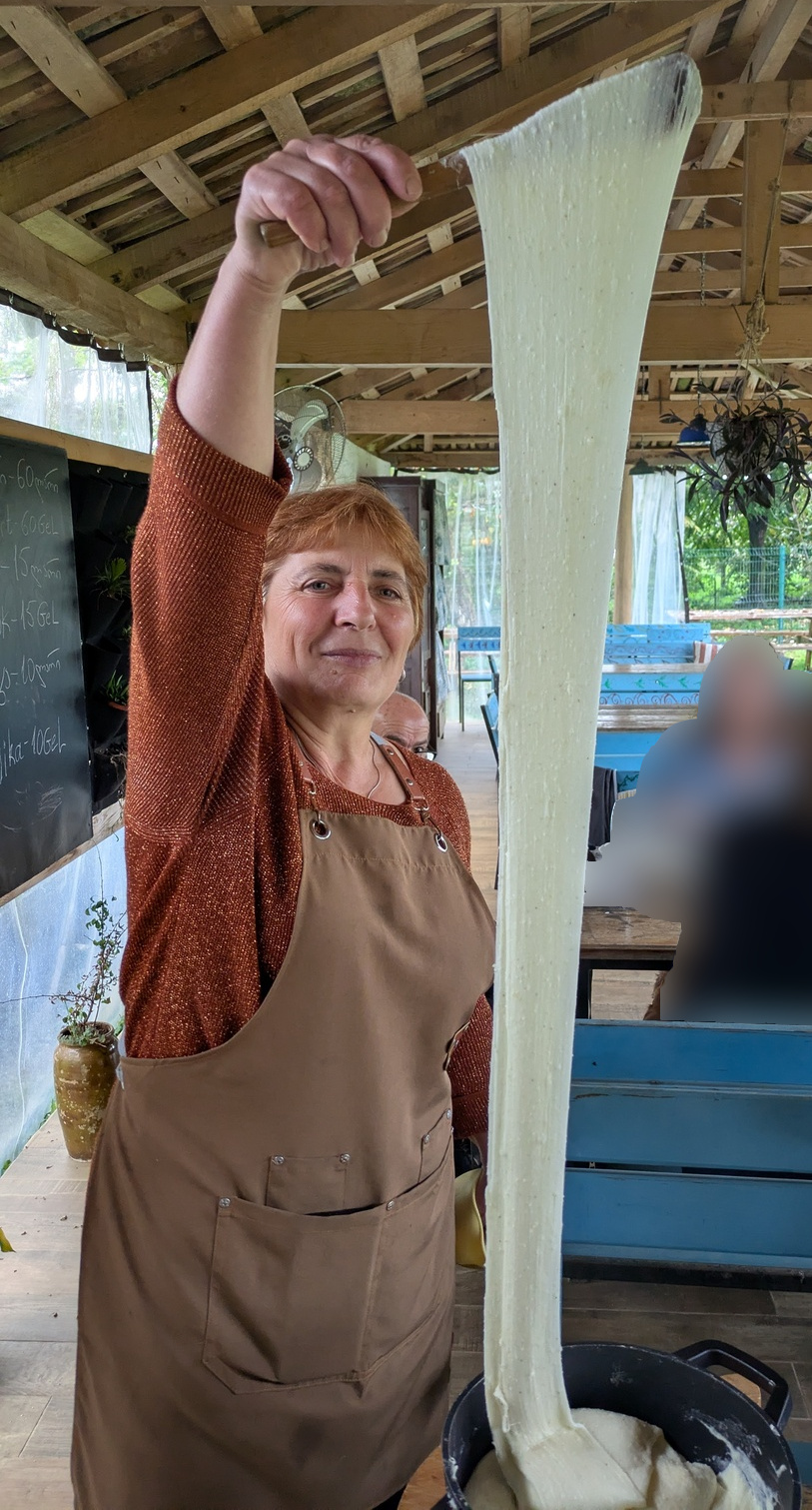
Lunch was another multi-course meal. Two dishes standout: a traditional stretchy cheesy polenta called Ghomi, and the khachapuri. The Ghomi was mixed and stretched right in front of us, by master chef Nino Mitagvaria. The khacapuri was topped with a regional soft cheese. Not only was it striking to look at, but it was creamy and delicious. It became my favorite khacapuri.
Agro Guest House


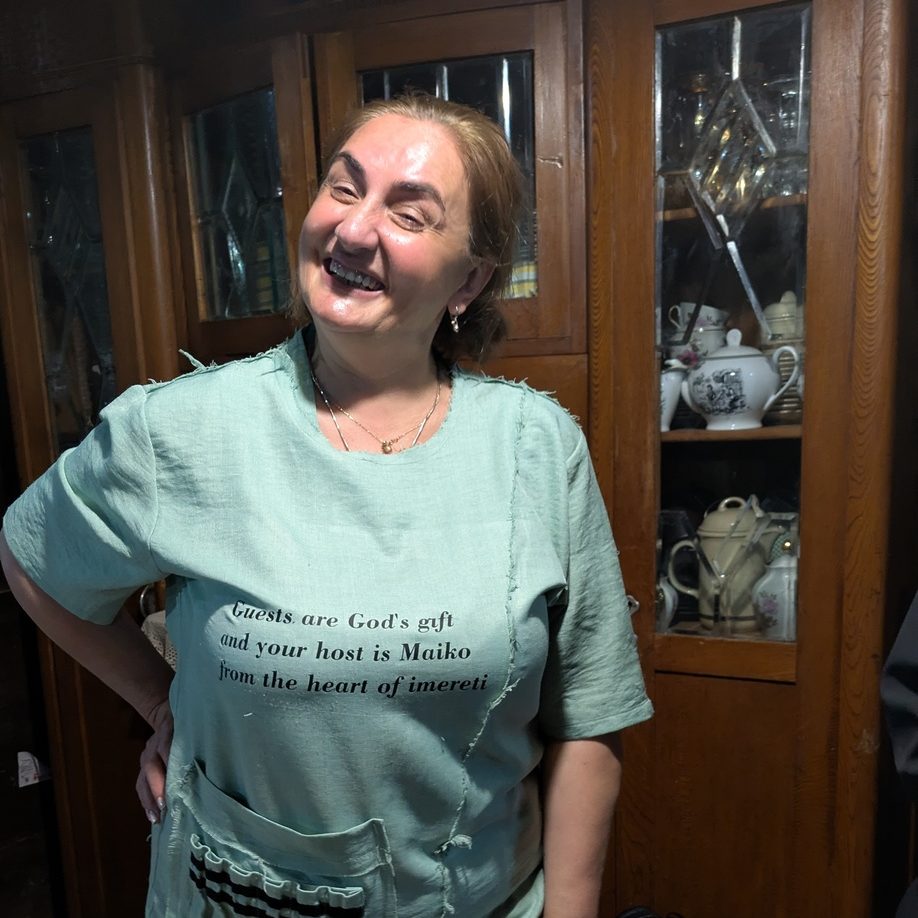
Our last meal in Western Georgia was at the Agro Guest House. Guest Houses are a style of hotel found throughout Georgia. At Agro, you can rent a room and learn about local agriculture or how to cook local cuisine. We did not stay at Agro Guest House, but we did receive a cooking lesson: how to make the eggplant rolls that was, by now, quite familiar to us.

We were also shown how to make Khachapuri. It was made in a very traditional way, cooked in clay pots that were heated in the fireplace. Incredible!
The entire meal was fantastic. And on top of that, we were also regaled by a folk group (I did not catch the name) singing traditional Georgian polyphonic songs. It was an amazing experience.

Kutaisi Market
No trip to Kutaisi would be complete with visiting the public food market. It is an enormous area, covered and filled with rows and rows of farmers selling their produce. We sampled a couple of Georgian snacks and bought some spices. It’s a great place to shop at.
On the road
After finishing our tour of Western Georgia, we went on the road and traveled to Northern Georgia. We made a few stops along the way.
Zaliko’s Workshop
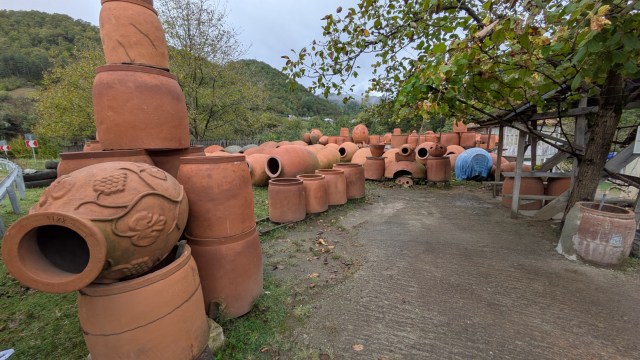

First stop was in the village of Makatubani, where we met master qvevri maker Zaliko Bojadze. The qvevri is a fundamental part of natural wine making in Georgia. Its use dates back 8000 years. The qvevri is a clay vessel that houses the grapes while they are fermenting. Is has a unique egg shape. Qvervris are completely buried in the ground, which stabilizes the temperature. Zaliko has been making qvevri for decades and is the most renowned master in Georgia. All of his qvevri is made by hand.
Surami Village


The next stop was Surami Village in the Shida Kartli region. Surami is famous for its regioank bread, Nazuki. Historically, there were stalls all along the road through Surami that sold the bread. But new highway construction has decreased traffic on this road, and only one shop was open the day we passed through. There are plans to reopen these business on the new highway. Let’s hope that happens. Nazuki is a sweet bread, that reminded me a little of panettone in taste and texture, but shaped very differently. Our guide bought some nazuki which we shared. I loved this little bit of local food culture.
Iago’s Winery


We made one more stop before heading north, and that was with ‘The Wizard of Chinuri’, Iago Bitarishvili.
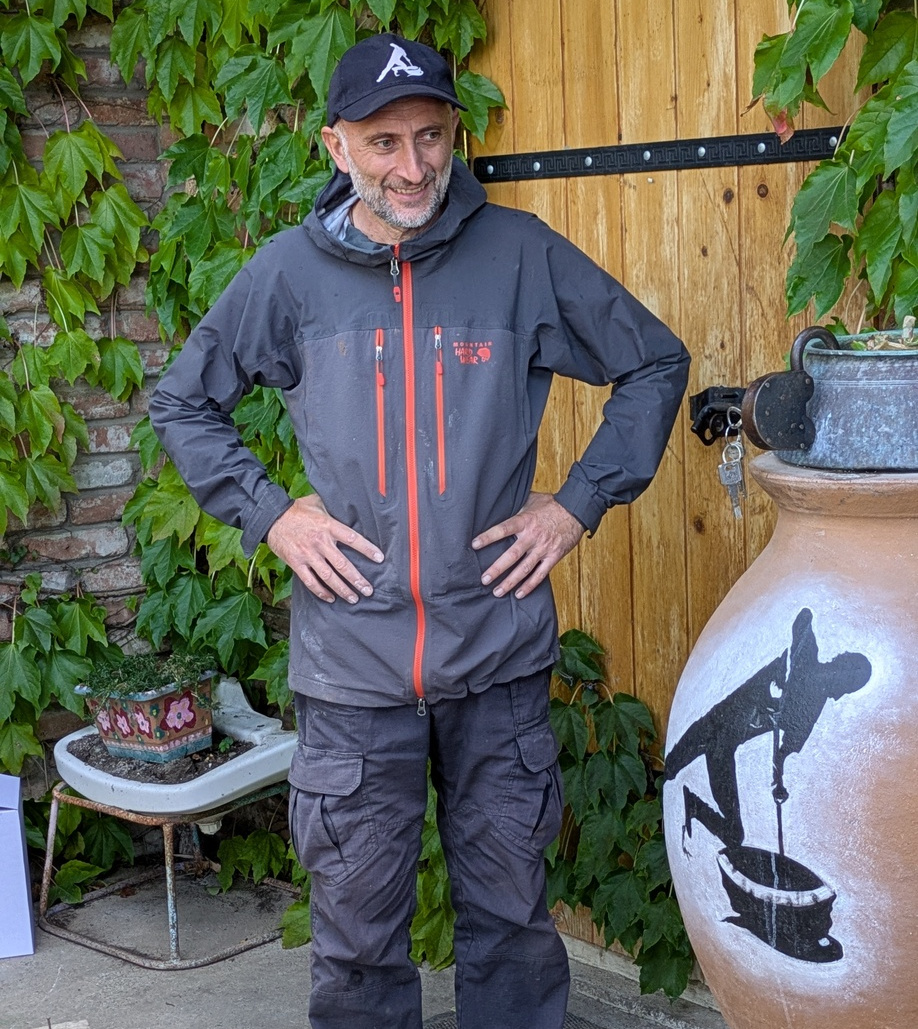
Chinuri is a local variety of grape that Iago uses to make his wine. Iago is one the forerunners of the organic wine movement in Georgia, being certified in 2005. His vineyard and winery are located in the town of Chardakhi in the Mtskheta region, not too far from the cathedral we visited on the first day. Iago was a kind and gracious host, and went into great detail about the process he uses to make wines. After touring the wine cellar, he served lunch.
This was another traditional Georgian meal. Several dishes stand out. The pkhali platter was one of them. It included corn cakes; his were my favorite. They had a nice texture and crunch to them. There were no beans, bu the pkhali served were memorable. There was one made of fried onions that I found delicious. Also on the platter were strips of smoked ham. They had a strong flavor that paired well with wine. Among the Khachapuri was one filled with spinach. Both his meat dishes stood out. The beef stew was strong and flavorful. And his roast pork kebobs were amazing. Smoked over dried grape vines, they had a distinctive flavor. Paired with a sour plum sauce, the kebobs were fabulous.
Northern Georgia
Rooms Hotel Kazbegi
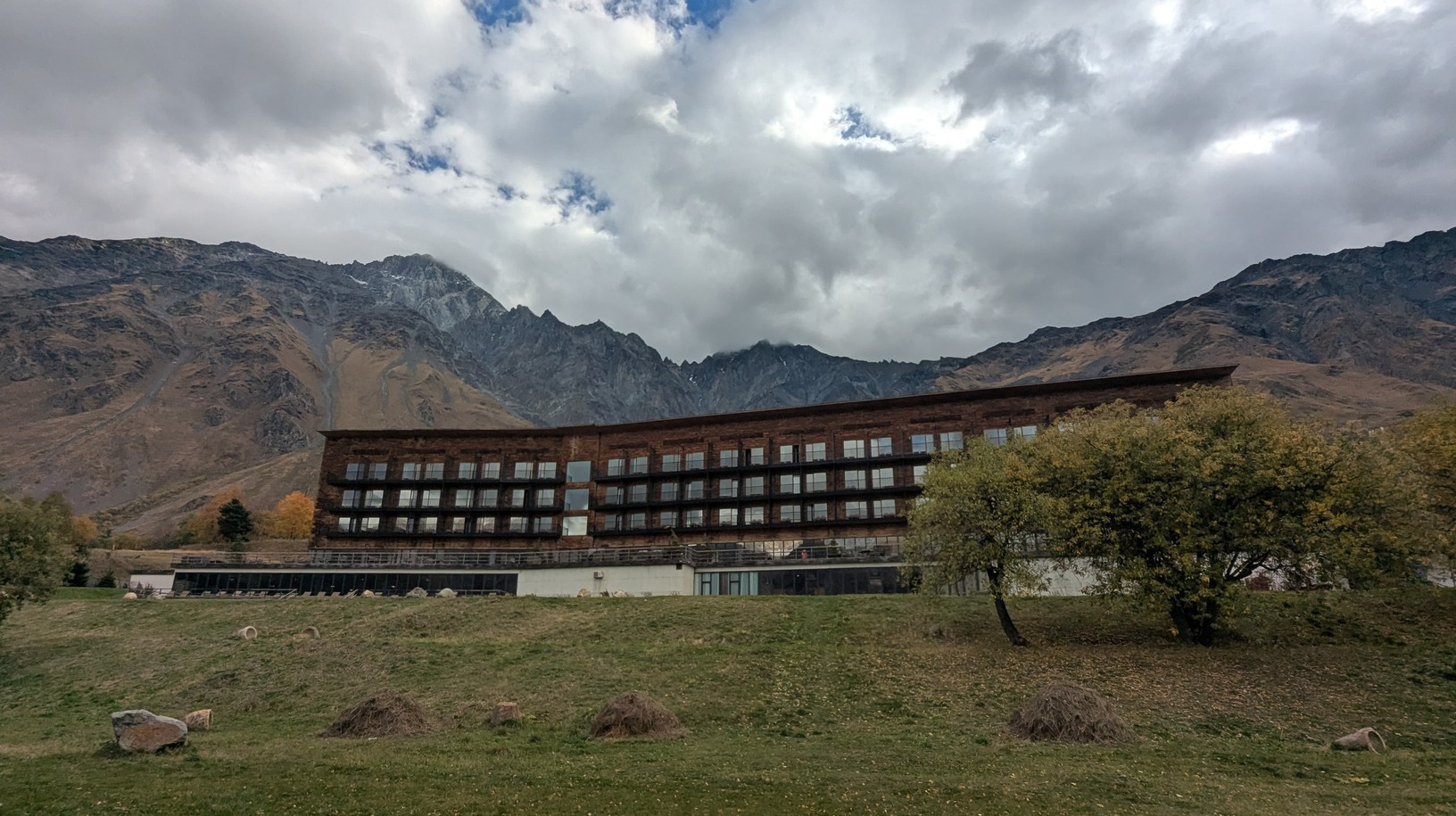

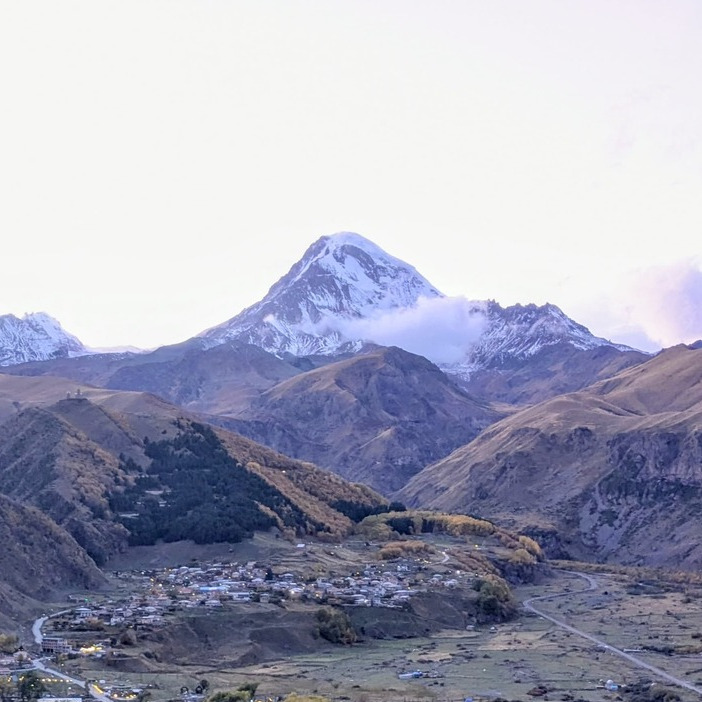
Our destination in Northern Georgia was the Kazbegi district. The area in known for its mountains and hiking tails and is not a region where wine is grown. We spent the time hiking and had most of our meals in our hotel, the Rooms Hotel Kazbegi. It is in the town of Stepantsminda (“Saint Stephan” ), but the town is often referred to as Kazbegi, its name when under Russian rule. Rooms is an luxurious hotel and had spectacular views of Mt Kazbek.
We had one multi-course dinner at the hotel. It was a mix of traditional Georgian dishes and contemporary fare. The Georgian dishes included Khachapuri and sauteed mushrooms. It included several salads, including a falafel salad and an eggplant salad. Also noteworthy was a dish called Tolmades. It’s very similar to the Greek dolmades (stuffed grape leaves), but the key difference of being stuffed only with meat instead of a rice/meat blend. Dessert was a platter of small cakes: strawberry, chocolate, and pistachio. The pistachio was my favorite.
Tsdo Villiage
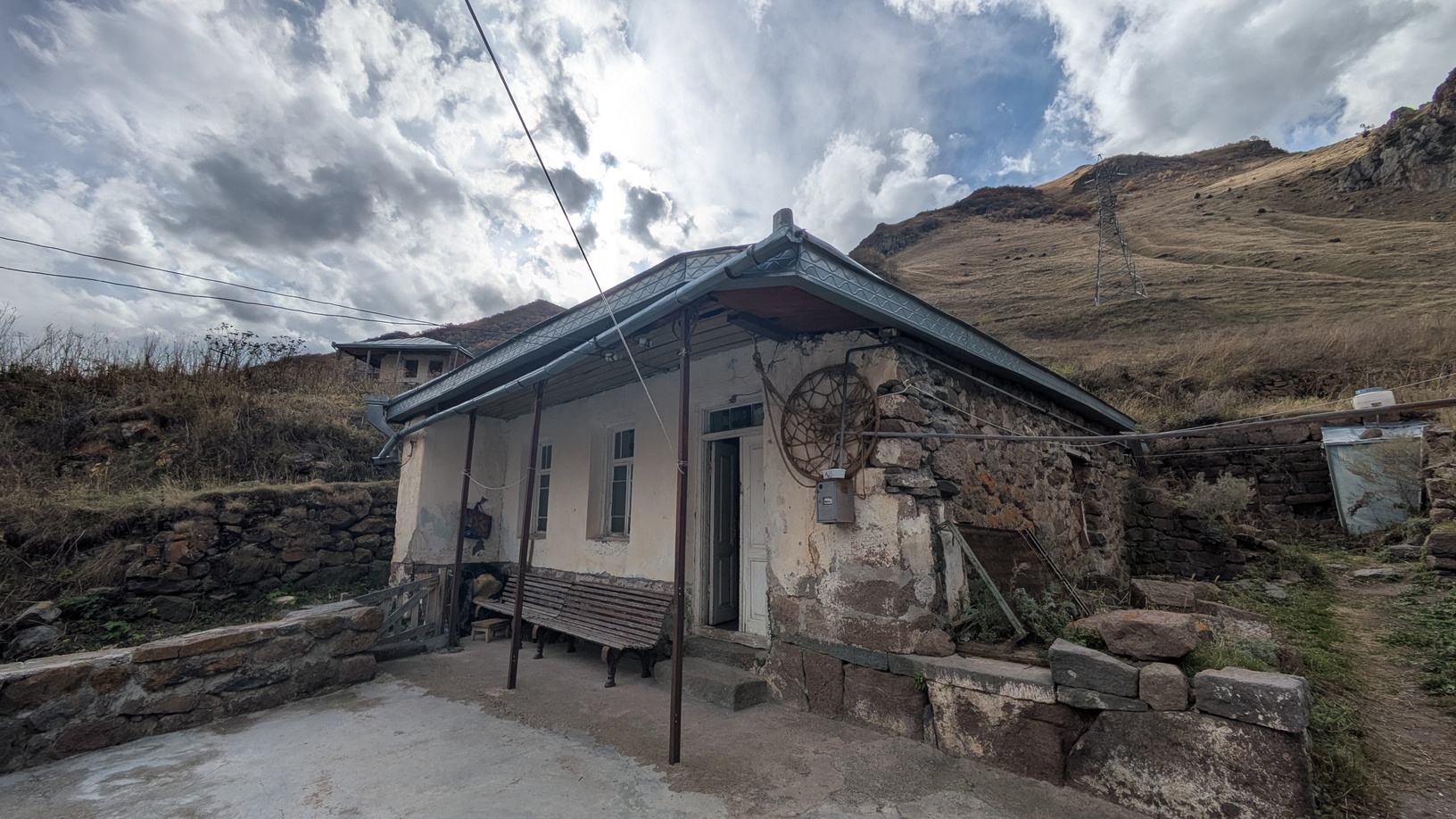

In Northern Georgia, we had one memorable meal outside of the hotel. In nearby Tsdo Village, we were welcomed into the home of Jimsheri. Jimsheri has made it his life’s work to share the traditions of his village.

Tsdo is on the Georgia Military Highway, a major route through the Caucasus mountains from Russia through Georgia. As the name implies, control of the route was of great military importance. At times, it has be controlled by Persians, Russian, Germans, or Turkey. The village of Tsdo was originally there to man a fortress for controlling the highway. Remains of the fortress can still be seen. Today, Tsdo is a small agricultural village with a population of about twenty. The highway remains a major commercial route, with trucks traveling from Russia to Georgia and Armenia.

Upon arrival at Jimsheri’s house, we received lesson on how to make khinkali. It was given by a woman named Tamar. Tamar had already made the filling, which was ground pork. Normally broth would be added to the filling, to make the dumplings soupy, but to make preparation easier the broth was omitted. The dough was also already made. Tamar cut it out into circles and put the filling in. Our task was to seal the dumplings. It is harder than it looks. These dumplings were served during lunch.
Among the khachipori was one stuffed with beet leaves, which I rather liked. Jimsheri also served a beef stew which was fabulous. The best stew of the trip. Also of note are the drinks. Home made cherry juice was served with the meal. And at the end of the meal, we had shots of home made brandy. Potent and delicous!
Eastern Georgia
After leaving Kazbegi, we traveled to the Kakheti region in eastern Georgia. Kakheti is the breadbasket of Georgia. In the center of Kakheti is a valley surrounded by mountains; the flat part of the valley is covered by agricultural fields that extend as far as the eye can see. But all the towns are located in the foothills of the mountains. No one lives in the bottom of the valley. The reason is historical. Georgia has been invaded so many times that people live in hills, protected by fortifications.
Lagazi Wine Cellar


Our first stop in Kakheti was lunch at Lagazi Wine Cellar, owned by Shoto Lagazidze. I was looking forward to this stop the whole trip because Shoto is reputed to have the best khinkali in Georgia. His secret – caraway seeds. The seeds adds a lot of flavor, but Shoto’s khinkali is notable for other reasons. His khinkali were larger, juicier, and had more meat than others. His reputation is well earned. Other highlights of the meal were homemade sourdough bread and a melted cheese called atkhuri, which the bread is dipped in. Atkhuri is served hot, like fondue.
Cafe Marleta

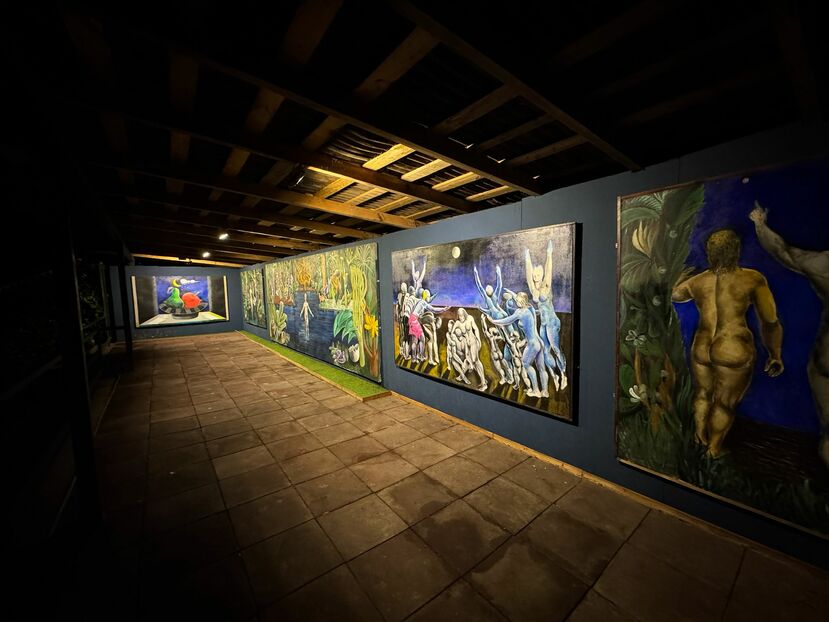


After lunch with Shoto, we checked in to our hotel and relaxed. That evening, we had dinner at Cafe Marleta (named after the owner’s cow). The cafe is located at Chef Sopo Gorgadze’s home. But it is much more than a home. In addition to the restaurant, there is a large backyard filled with walkways and crevices, every wall covered with reproductions of Sopo’s father’s paintings. Among the crevices is one with a ping pong table, which we played at. It was a wonderful experience.
And the meal was amazing. One of my companions felt that it was the best of the trip. The chicken in garlic sauce was certainly the best chicken we had. Other highlights were: a cheese bread with fresh figs on top, eggplant stuffed with ricotta cheese, and glazed squash.
Second day in Kakheti

Our second day in Kakheti was spent with John Wurdeman. John has a fascinating story. Originally from the United States, he was living in Russia but longed for Georgia. After the collapse of the Soviet Union, he had his chance and moved in the late 90s. His work then was to document the traditional polyphonic music. In 2005, he was asked to do the same for the wine industry. What started as a side project, grew to become a significant part of his life. John is now a titan in the Georgian natural wine industry. That day, we visited several of his establishments.
Crazy Pomegranate


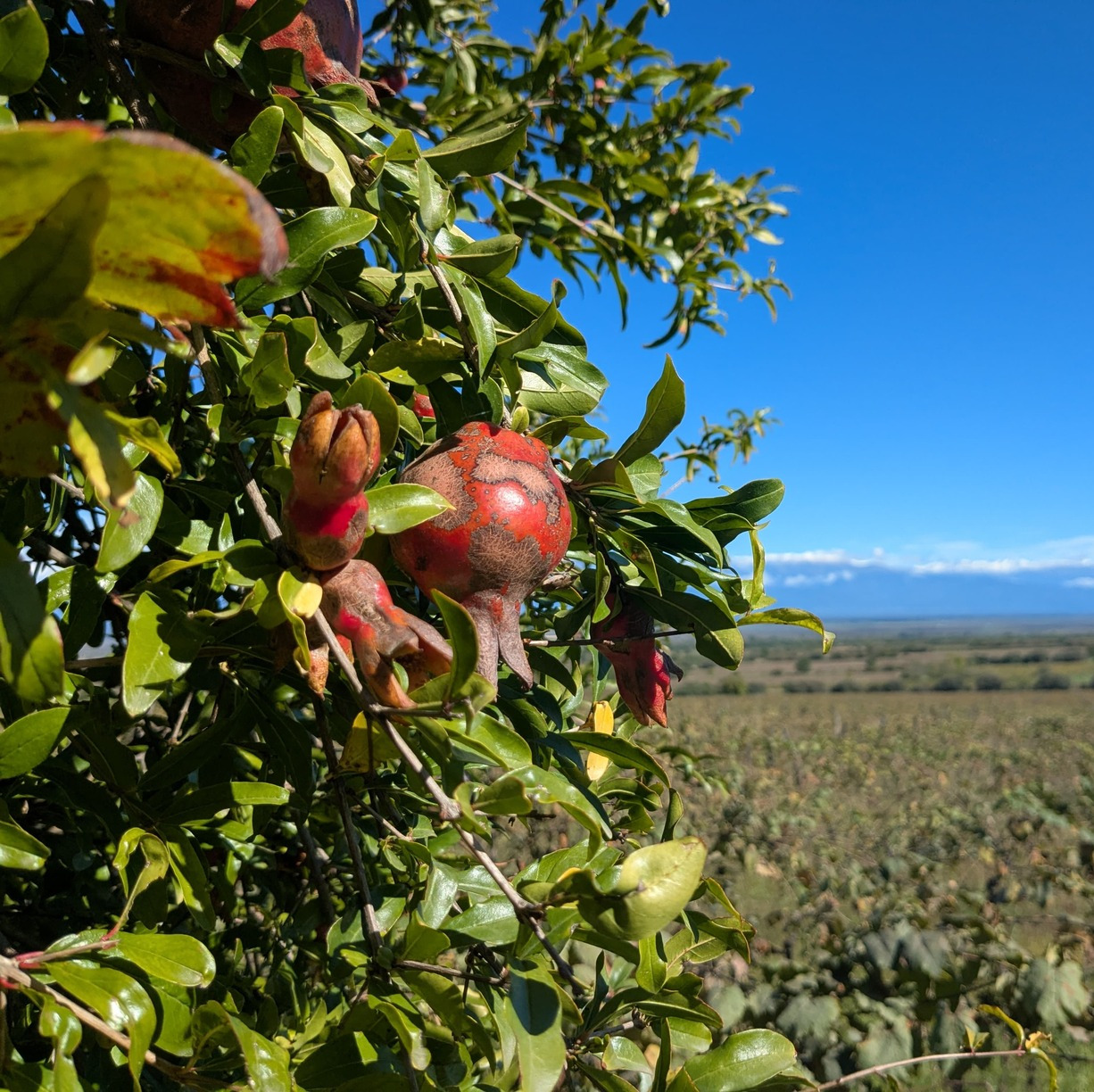
First up was John’s winery, Pheasants Tears. We toured the grape fields and the wine cellar, while John gave an overview of the history of the modern natural wine movement in Georgia. In response to a question, he relayed the story of how he ended up in Georgia, a country that has become his adopted home. After the tour we had lunch at the restaurant at the winery, Crazy Pomegranate (named so because there are wild pomegranates growing everywhere nearby).
The meal included Guruli style khachipori. This style has eggs mixed in with the cheese. The difference is noticeable: the filling is thicker and richer. Other notable dishes were sauteed greens mixed with walnut sauce, and hand pressed buffalo yogurt topped with vegetables.
Lost Ridge Inn Brewery and Horse Ranch
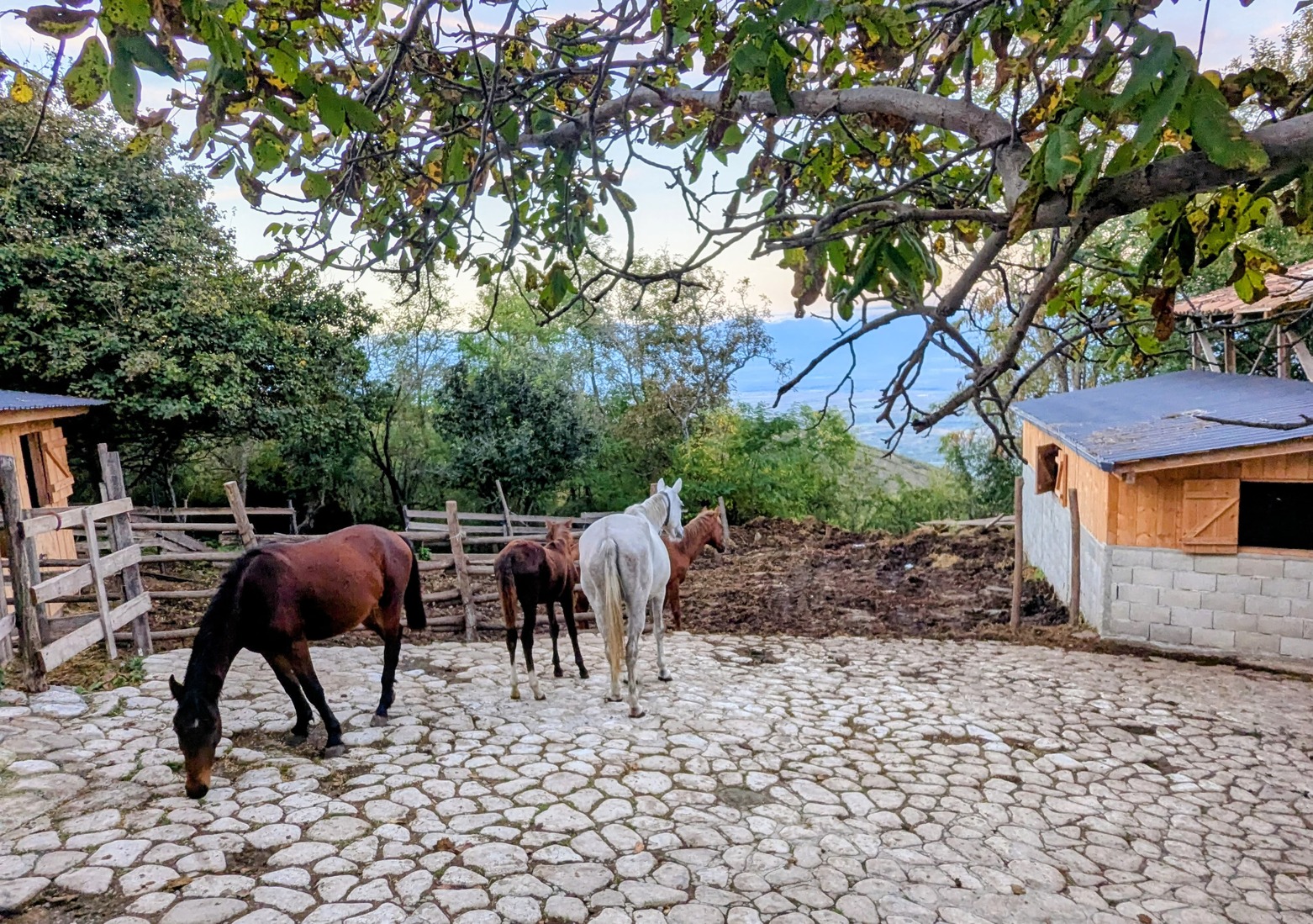
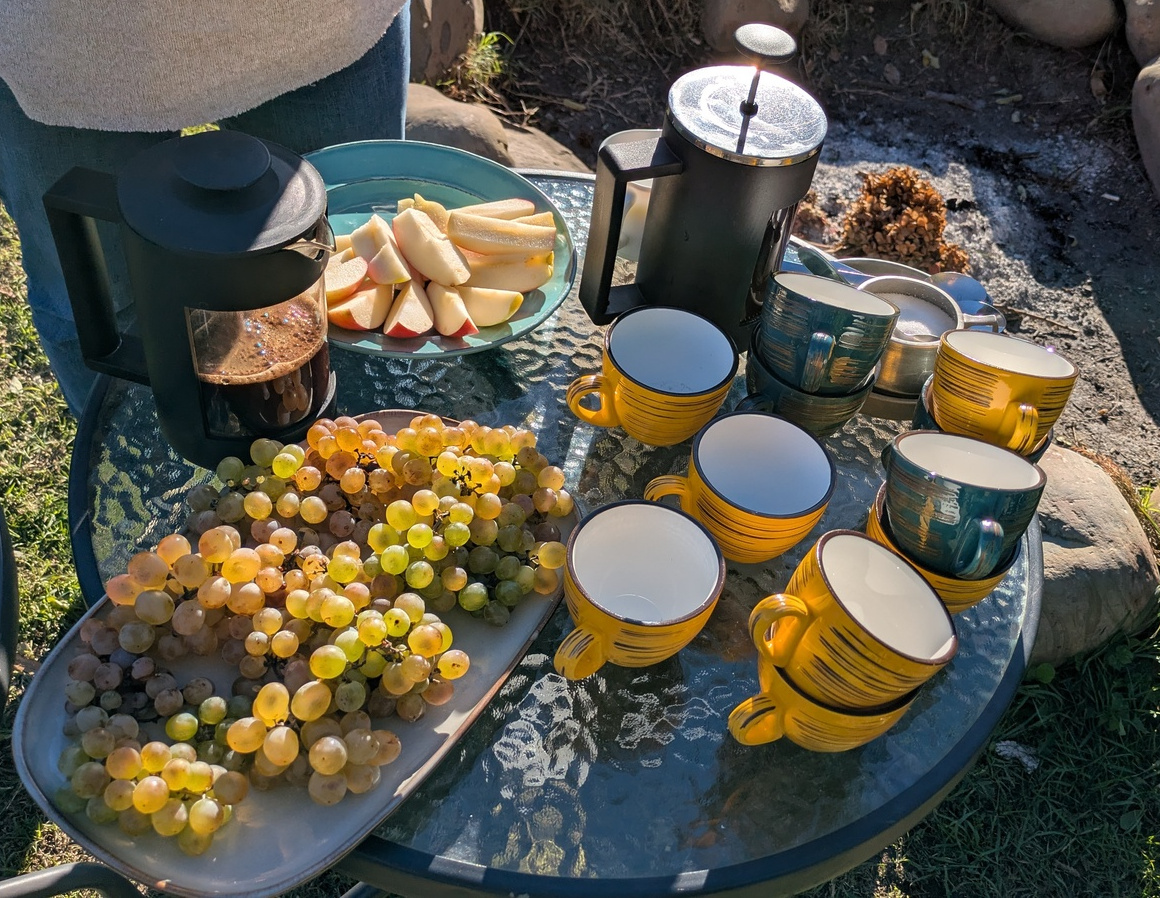

After lunch, we spent the afternoon at another of John’s properties, the Lost Ridge Inn Brewery. We relaxed in lawn chairs, drank tea and enjoyed the view. The property has a horse ranch, and several of us rode the horses on a ride along the mountainside. After the riding, we had a beer tasting with an American expatriate named Paul. All in all, it was a very relaxing afternoon.
Pheasants Tears

Dinner that evening was at the Pheasants Tears restaurant, which is in the town of Signagi. The history of this town goes back centuries. In the early 18th century, King Heraclius II fortified the town to protect the area from Dagestani invaders. Some of these fortifications remain.

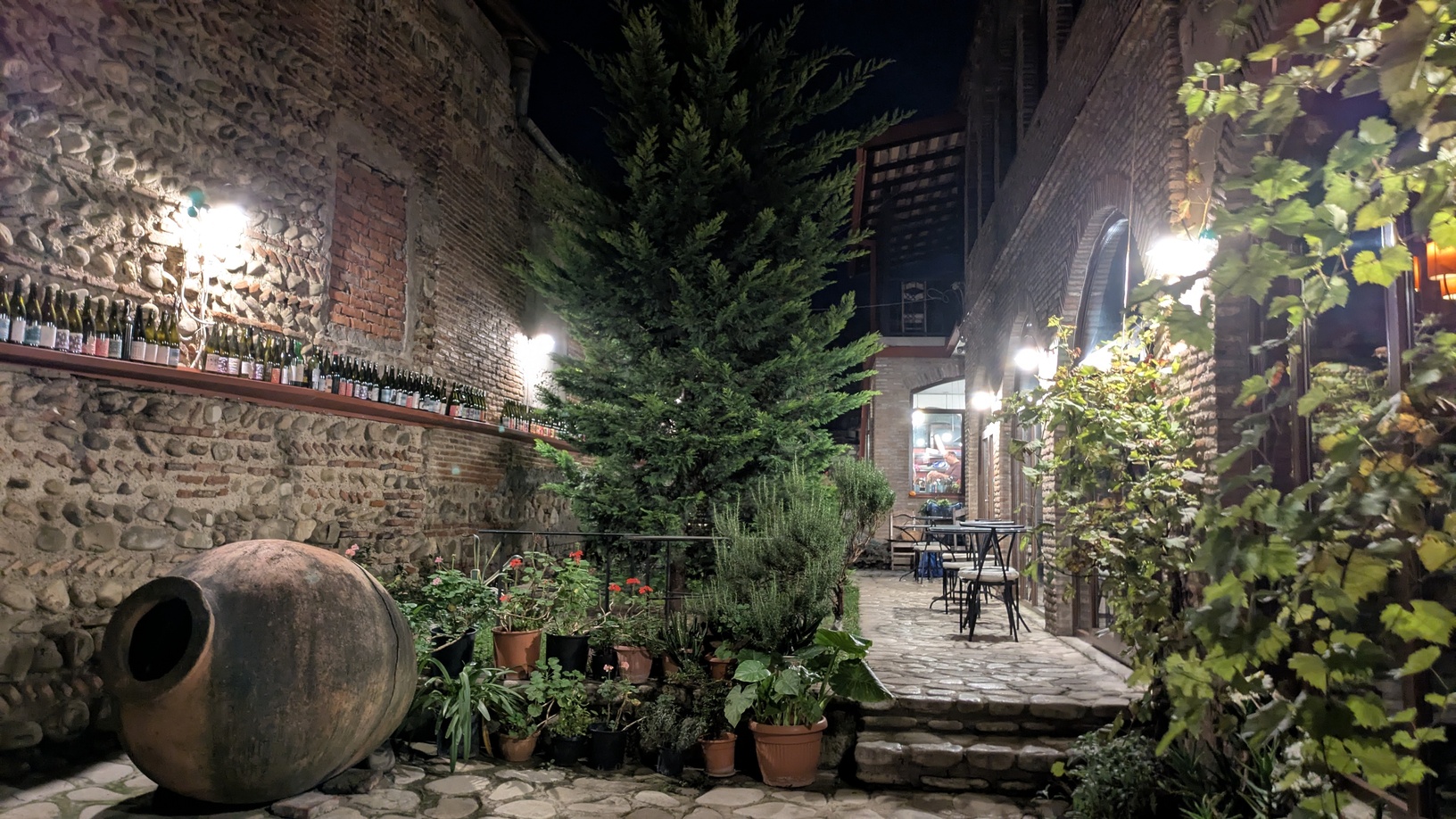
John met us at the restaurant and regaled us with stories of life in Georgia story. Dinner was a multi-course meal of Georgian food. Highlights include: pickled beets, eggplant with a yogurt sauce and a touch of wasabi, and fermented green tomatoes.
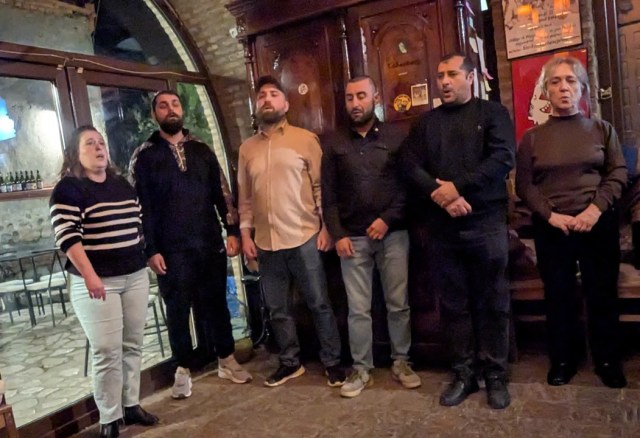
Also during the meal, we were treated to Georgian music from the group Zedashe.
Lapati Wines

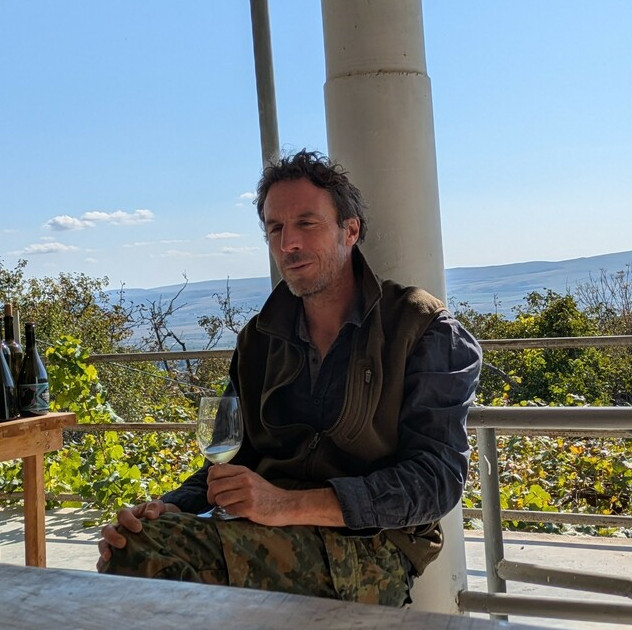
The next day, we departed Kakheti. But before doing so, we had one last stop at Vincent Julien’s winery, Lapati Wines. We toured his wine cellar and had a wine tasting with several of his pét-nats (sparkling wine where the wine is bottled while the grapes are still fermenting.
After the tasting (because Vincent, being French, does not drink pét-nats with food), he treated us to a home cooked lunch. The main dish was Beef Bourguignon, made with a Lapati wine.
Back to Tbilisi
After finishing our tour of Eastern Georgia, we returned to Tbilisi for the last 2 days of our tour.
Alubali Restaurant

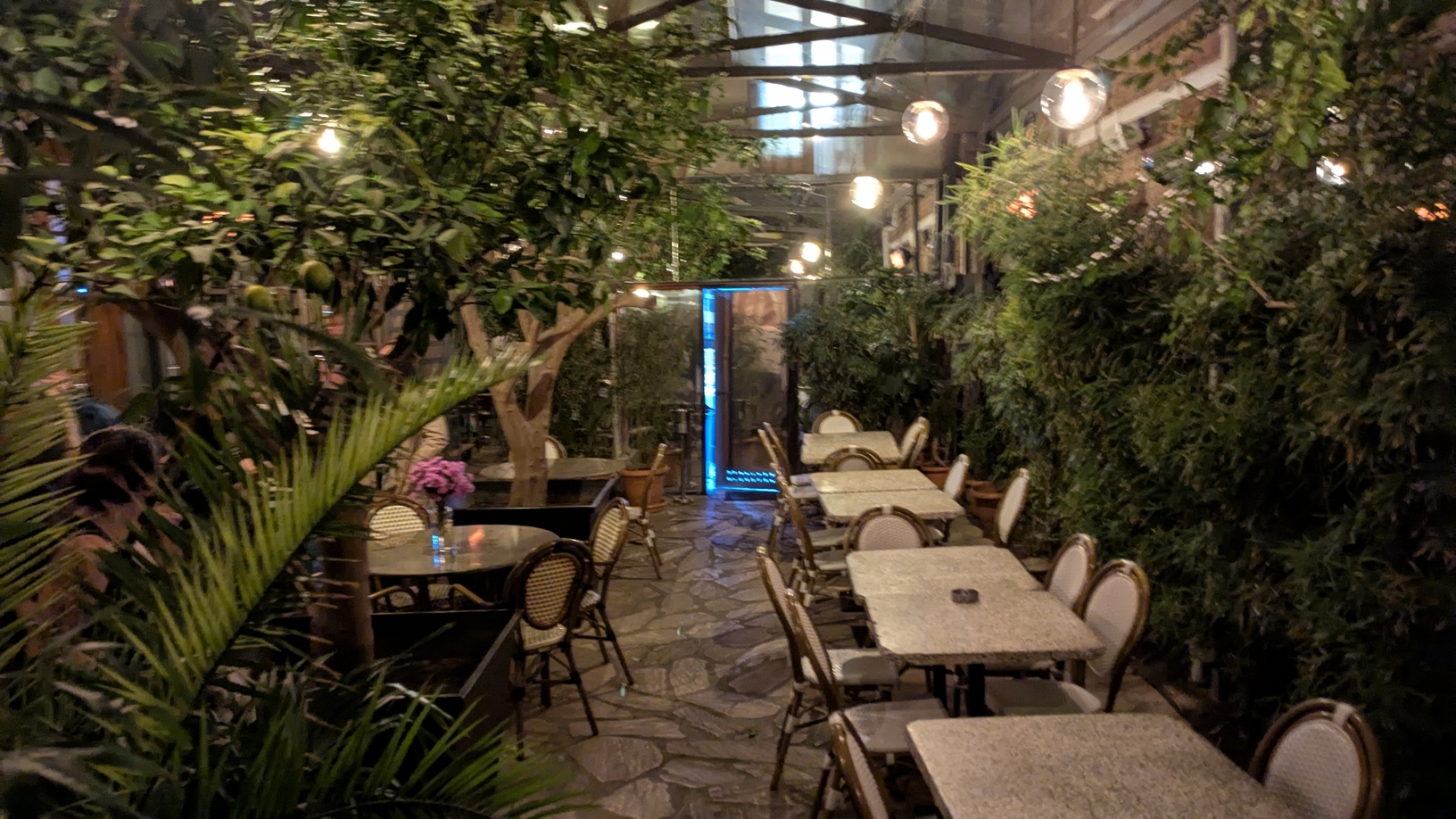
On the penultimate night, we ate at Alubali restaurant. It is in downtown Tblisi, on a side street not far from the Rustaveli metro station. Alubali serves Mingrelian cuisine. This turned out to be quite different from what we had been having.
The ingredients were familiar, as some dishes featured eggplant or mushrooms, but they were a bit different. The eggplant was grilled, not rolled and stuffed. The mushrooms were sauteed, but were served with green tarragon based sauce. The rest of the vegetables were also different. A green bean dish had eggs mixed in, and was seasoned with copious amounts of garlic. The green salad was topped with fresh herbs, chopped walnuts, and a vinaigrette. The meat dishes were a lamb kebob and a chicken braised in a tomato sauce. My favorite dish, however, was a small casserole made with potatoes and cheese.
Shavi Loma
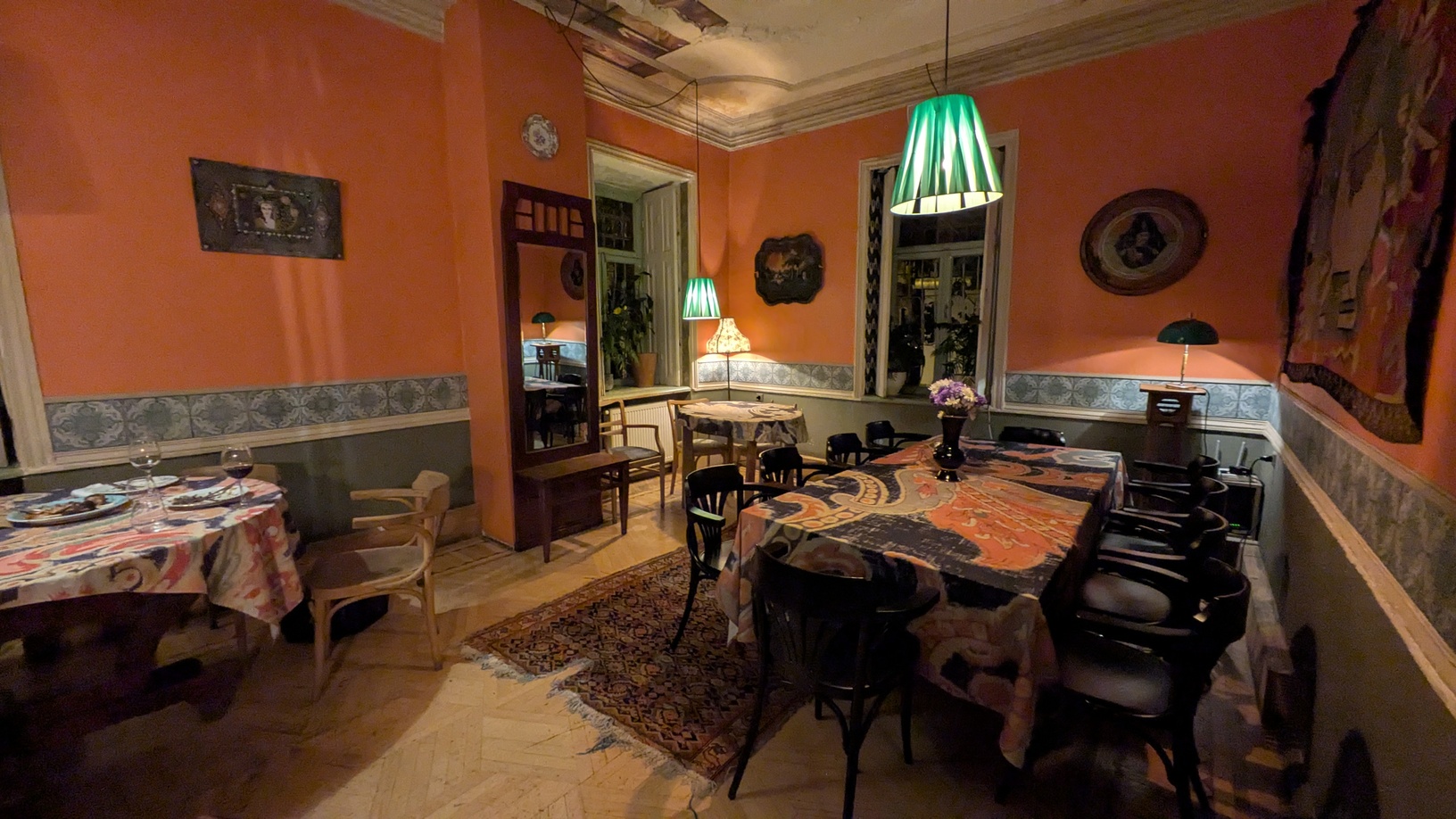
Our final meal was at Shavi Loma (Black Lion), located in the northern part of the city, far from the downtown area where we were staying. We were joined by the folk singing group Sakhioba. They ate with us, but also regaled us with polyphonic songs.
The meal featured several salads: mixed greens, beet, and a Ratatouille style mixed vegetable salad. Meat dishes included a lamb stew, and pork with a barbecue style sauce. The lamb stew was a favorite of ours. Dessert was a candy made from crushed walnuts, shaped into the form of a walnut.
Off the tour
While in Tbilsi, we had several occasions to dine on our own. Here are the places I ate at.
Iasamani

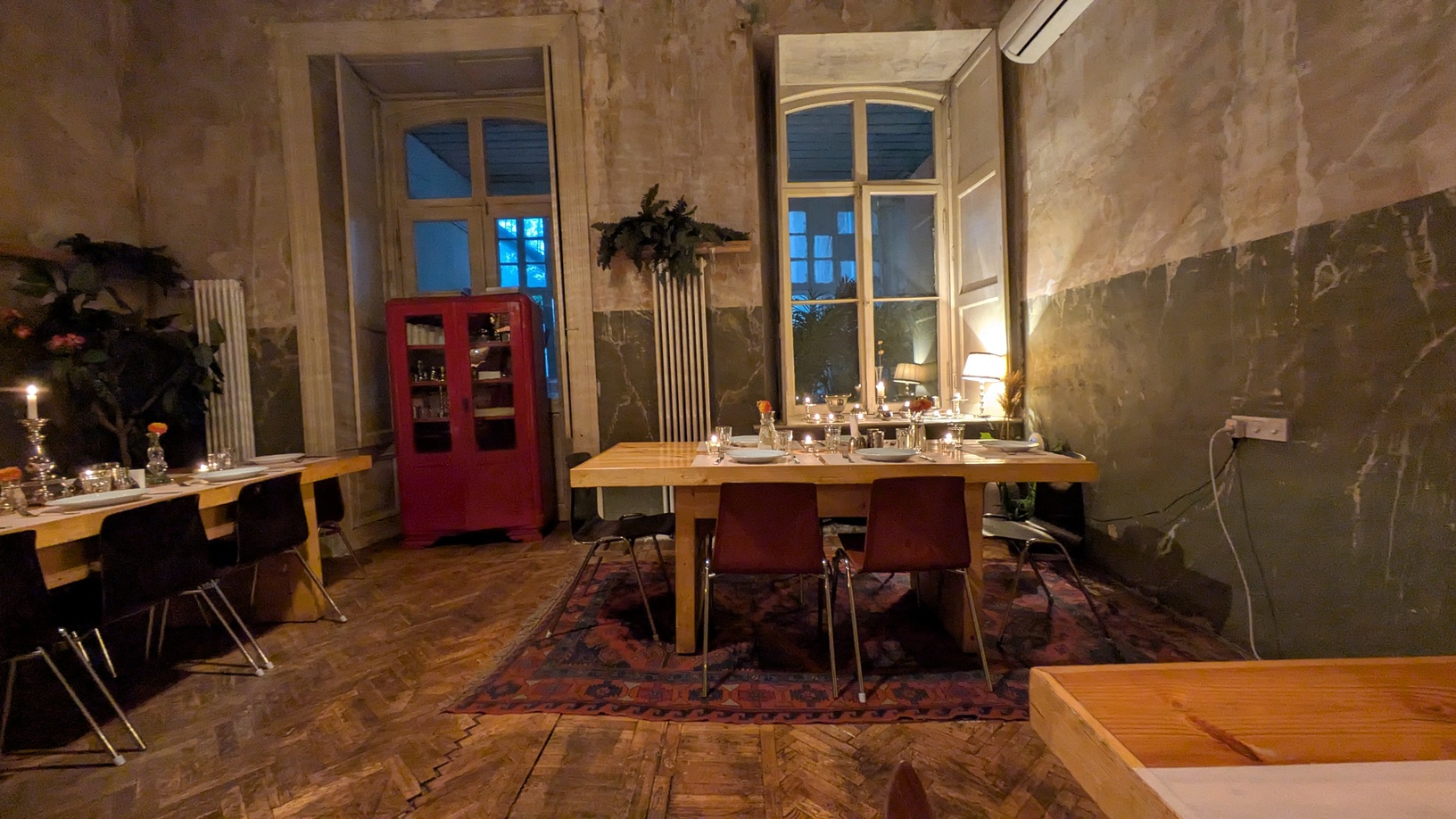
The day we arrived, before the tour officially started, a small group had dinner at a nearby restaurant, Iasamani. It features modern Georgian cuisine. We ordered several appetizers and a couple of entrees, sharing the meal.


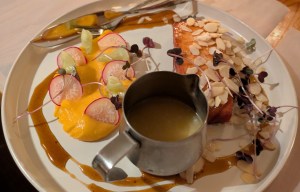

For appetizers, we had a tomato/cucumber salad and cauliflower in walnut sauce. Entrees were Salmon with Pumpkin puree and Chicken in a plum sauce. The salmon was served with a lemon flavored butter, which, made the salmon divine. The chicken was tender and plum sauce had a sweet and sour flavor, providing a great contrast. provided depth of flavor. The meal was excellent.
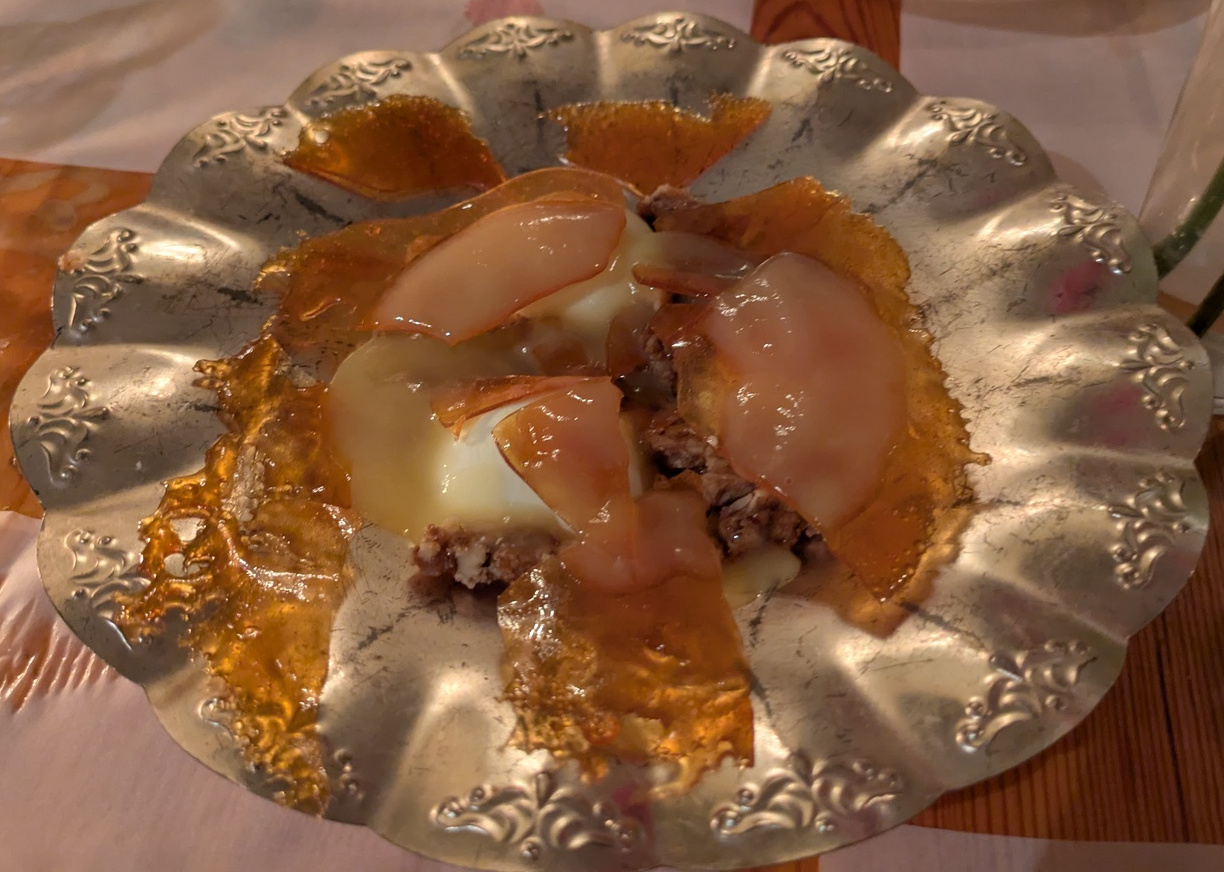
For dessert, we had a yogurt called Matsoni, covered with caramelized sugar and walnuts. There’s a technique for breaking the sugar, and the waiter had to do it for us. The dessert was quite unique and we loved it.
La Gamba
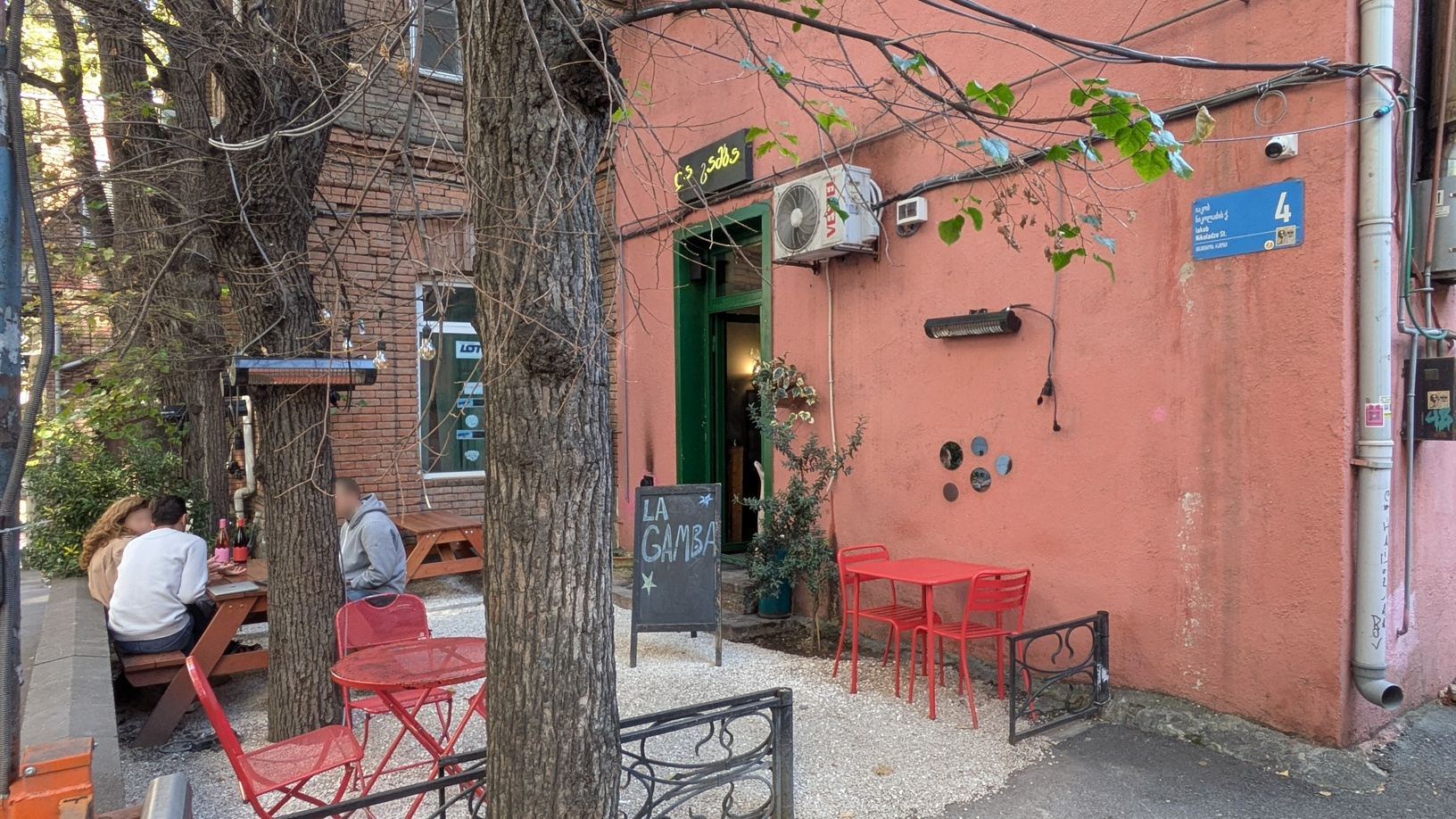

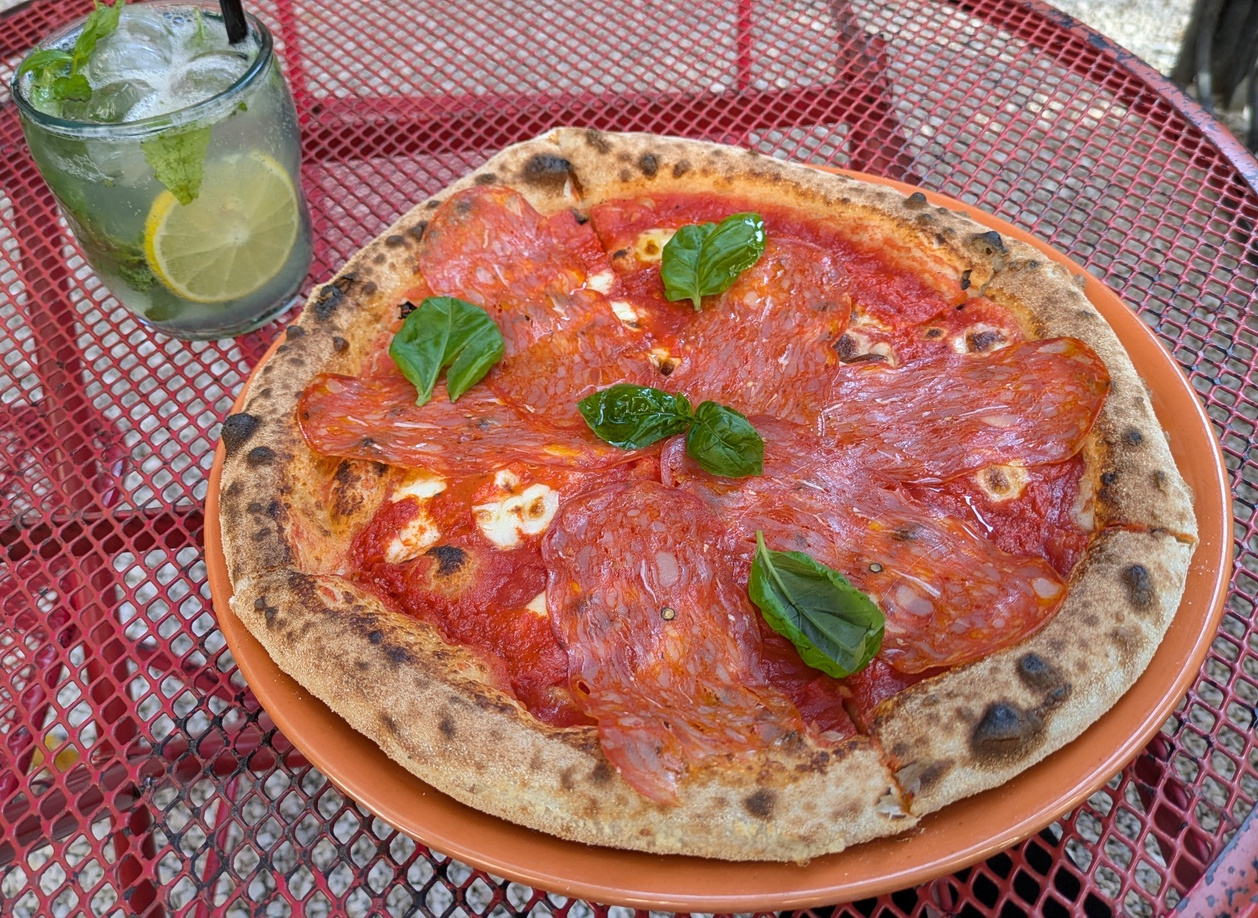
La Gamba is a pizza restaurant, quite a bit north from where we were staying. Several universities are near it and I got the impression it catered to that crowd. Our guide highly recommended it, and I went there for lunch on our free day. They serve Italian style pizzas; there are 10 varieties. It was a tough choice, but I went with the Vesuvio. Its toppings are Italian tomatoes, salami, and a spicy pepper cream. This made made for a good blend of flavors. The crust was crisp and thin. All in all, a nice light meal.
Shavi Coffee

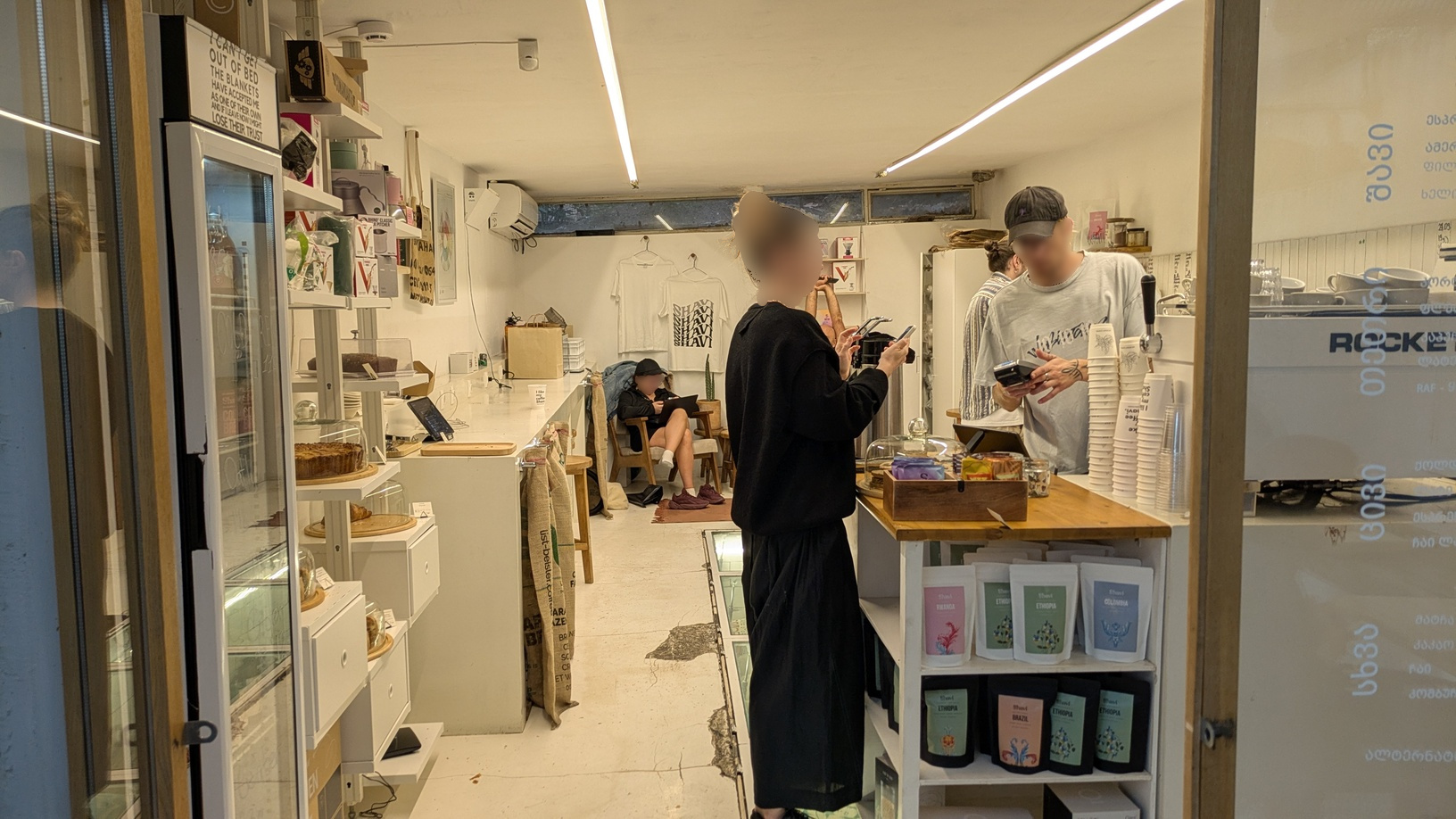

One morning, before we departed our hotel, I stopped at a nearby cafe to get some coffee. The cafe, one in a chain called Shavi Coffee, was recommended by our guide. It has a unique ambience, as it is in a building that was formerly a garage. Shavi is Georgian for black, and that is how they serve the coffee.

I was given a choice of drip or freshly made. I chose freshly made, not realizing this meant pour over coffee which takes about 10 minutes to make. But it was worth the wait. Besides coffee, Shavi has pastries and quiches. I had a piece of the sweet potato quiche. It was good, but a bit heavy that early in the morning. Overall, Shavi is a fun place with great ambience.
Georgia’s books

As readers of this blog know, I like to buy local books whenever I travel. I bought several. The first was a cookbook of traditional Georgian cuisine. It contains recipes for many of the dishes we had throughout the trip and I look forward to using it. The book I bought is in Georgian, but there is a book in English that is well regarded for Georgian recipes. One of my companions bought it.

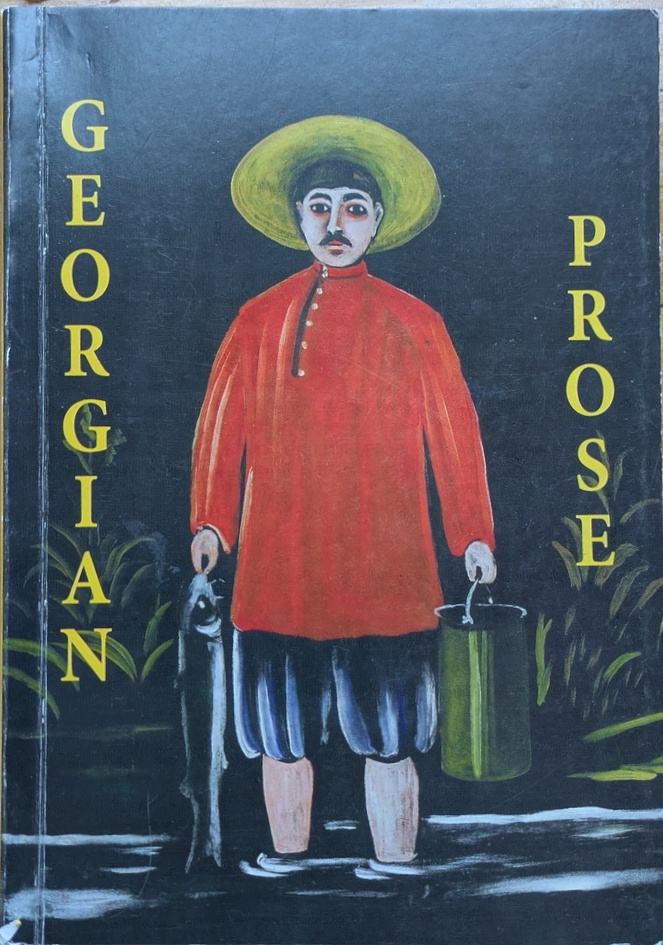
I also bought several books at Prospero Books, and independent book seller in downtown Tbilisi. One was a collection of stories called Georgian Prose and the other is a history book about Character in Georgia. The prose book features writers from the late 19th and early 20th century.
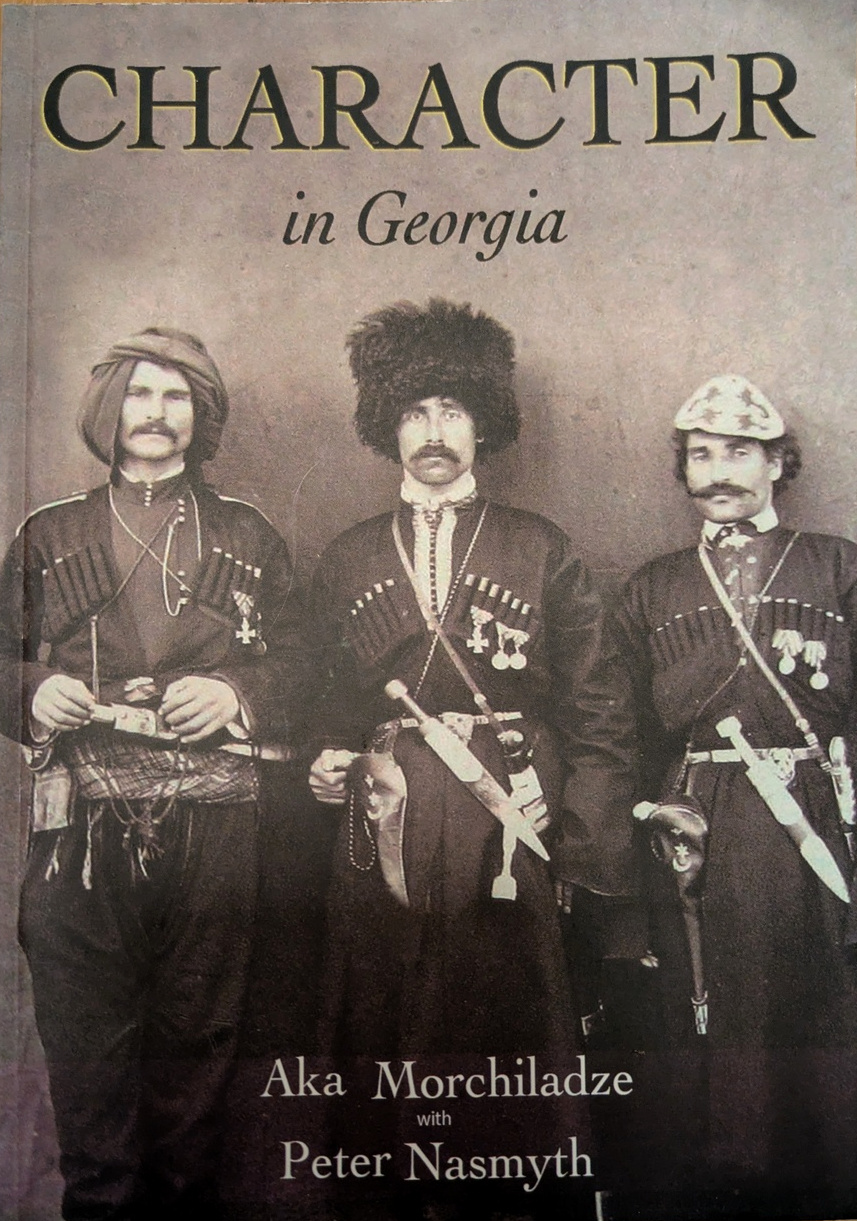
I have read the first story, a medieval era tail centered on conflicts with the Turks. I found it a bit bizarre, probably because I am not familiar enough with the culture. The history book explores national character through people and anecdotes also from the late 19th and early 20th century. I look forward to reading it.

The final book I bought was an adaptation of a classic Georgian tale, The Man in the Panther Skin. This version was very short and I have already finished it. It turned out to be a cliff notes style summary of the story, and written for children. As such, I only got a small tasted of the poetry of the original. Even in this limited form, it makes for an interesting tale.
 Jim's Dining Guides